Despite introducing new legislation in late 2024 to regulate the cryptocurrency mining sector, Russian authorities report that a significant majority of miners remain unregistered. According to Ivan Chebeskov of the Finance Ministry, nearly 70% of crypto miners are still operating outside the legal framework.
Widespread Non-Compliance with Registration
Russia began enforcing two mining-related laws in October and November 2024, defining legal parameters for mining and mandating registration with the Federal Tax Service. However, only around 30% of mining businesses have complied. Chebeskov, speaking to local media outlet TASS, acknowledged the limited success of these regulations so far.
“When introducing mining regulations, our general approach was to bring this industry out of the shadows as much as possible. We have not yet completed this process,” he said, stressing that efforts to increase registrations would continue.
Government May Impose Heavier Penalties
Although specific enforcement strategies were not disclosed, previous reports suggest that stricter penalties for non-compliance could be on the horizon. On 9 June, Forbes Russia reported that the Ministry of Digital Development was drafting legislation to raise fines for illegal mining operations from 200,000 rubles to as much as 2 million rubles (approximately $25,500).
These proposals reflect the government’s increasing frustration over the underground mining economy and its intent to curb unregulated activities through stronger deterrents.
Ongoing Crackdown on Illegal Mining
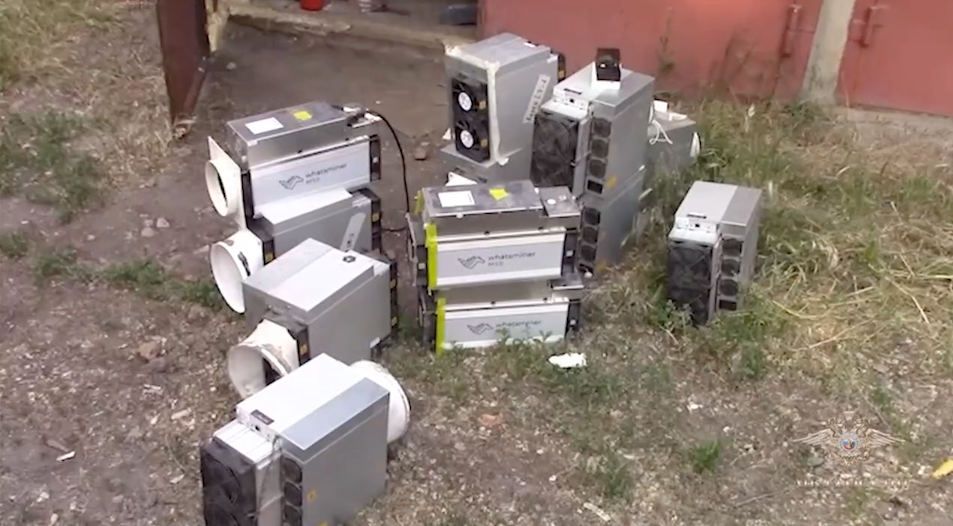
Chebeskov’s remarks came the same day as police dismantled an illegal mining operation in Russia’s Rostov region. The farm, located in a garage complex in Bataysk, housed 13 mining rigs and has led to a criminal case under Article 165 of Russia’s Criminal Code.

This follows another recent crackdown in the Pribaikalsky region, where authorities discovered a hidden mining setup inside a truck illegally siphoning electricity from a local village.
Criticism of Russia’s Mining Legislation
Despite the government’s push for regulation, many analysts and legal experts argue that the laws introduced last year fall short of fully legalising or clarifying the status of crypto mining in Russia.
Nikita Zuborev, chief analyst at BestChange, criticised the framework for failing to provide comprehensive guidance, stating it “only paves the ground for more precise taxation” rather than true legal clarity.
Furthermore, the laws bar foreign individuals from mining and impose geographical restrictions, which some say could stifle innovation and international collaboration in the sector.
Industry Remains Resilient and Growing
Despite regulatory challenges, Russia’s crypto mining sector is reportedly thriving. Vyacheslav Kopylov of Prostomining noted the importance of legal changes allowing companies to list mining equipment as assets and pay taxes. These moves, he believes, are helping professionalise the industry.
“Today, most of the large stands [at events like Russia’s Blockchain Forum] are occupied by companies offering turnkey services, from data centre design to full equipment maintenance,” Kopylov said, indicating that mining is evolving into a mature industry with advanced infrastructure.

While foreign ownership of mining operations is restricted, Russia’s low energy costs continue to attract international interest. Chinese firms, in particular, are showing growing enthusiasm for the Russian market.
Hotcoin’s Chief Operating Officer noted, “Many Chinese mining machine corporations have stood steadily in the Russian market, and it can be seen that more Chinese companies would like to join the Russian mining industry in the not-too-distant future.”
Conclusion
As Russia’s regulatory framework around cryptocurrency mining continues to evolve, authorities face an uphill battle in bringing miners into the legal system. With just 30% of operations registered and continued resistance from the sector, increased enforcement and revised legislation may be the next steps in the country’s effort to formalise its growing crypto economy.
Leave a Reply