
In a decisive blow to online crime, Telegram has shut down what is believed to be the largest crypto-based black market in history. Known as Haowang Guarantee, this Chinese-language platform had facilitated over $27 billion in illicit transactions before its abrupt closure on May 14.
The action came shortly after WIRED reached out to Telegram about an in-depth investigation conducted by blockchain analytics firm Elliptic. The report uncovered Haowang’s central role in a sprawling underground economy offering services ranging from crypto fraud and money laundering to harassment-for-hire schemes.
Telegram responded swiftly by banning thousands of accounts connected to the black market. These bans crippled Haowang’s operations, forcing the group to announce its shutdown through a hastily written post riddled with errors:
“Telegrame were blocked all of our NFT, Channels and group on May 13th 2025, Haowang Grarantee will cease operation from now.”
The Haowang Guarantee Empire: From Escrow to Exploitation
Originally operating under the name Huione Guarantee, Haowang functioned through a network of third-party vendors. It provided a crypto escrow system that allowed buyers and sellers of illegal services to trade with minimal risk of default. The anonymity and speed of crypto transactions made Telegram the ideal platform for this business model.
Vendors offered a menu of illicit services, including forged documents, hacking tools, financial fraud assistance, and laundering solutions. By July 2024, Elliptic began tracking the network’s activities. Within just six months, it had recorded more than $24 billion in crypto transactions—figures that ballooned to $27 billion by the time of the shutdown.
The group’s operations were not hidden in the dark corners of the web; they openly advertised their services within public and private Telegram channels. This brazenness drew scrutiny from investigators and eventually brought their downfall.
Xinbi Guarantee: The Next Target?
Elliptic’s report didn’t end with Haowang. The firm also flagged Xinbi Guarantee, another Telegram-based black market. Similar in structure and scale, Xinbi had facilitated $8.4 billion in crypto transactions since 2022. What made Xinbi even more disturbing were reports of sex trafficking and harassment-for-hire services being offered through the platform.
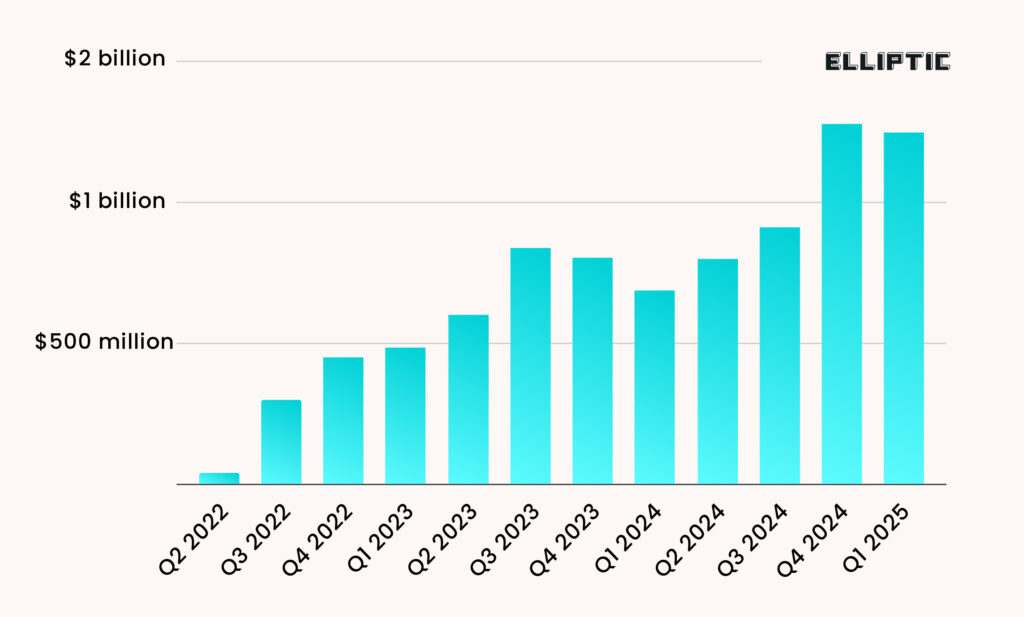
Following the public exposure, Telegram initiated another wave of bans targeting accounts linked to Xinbi. However, signs of resurgence have already appeared. Xinbi and other affiliated groups are reportedly attempting to rebuild through newly created Telegram channels, raising questions about the effectiveness of platform-wide enforcement in the long run.
A Deep Web of Influence and Power
Perhaps most troubling is the connection between these operations and legitimate power structures. Haowang’s parent company, Huione Group, is reportedly linked to powerful individuals within Cambodia’s political and financial elite. This revelation has raised concerns about how deeply these black markets may be entangled with established institutions.
Further complicating matters, a third black market—Tudou Guarantee—has started to gain traction. Haowang administrators have hinted at shifting operations to Tudou, which has already seen a spike in user activity following Haowang’s collapse. This suggests that while Telegram’s bans dealt a serious blow, the criminal network may simply migrate and evolve.
What Comes Next?

Elliptic’s co-founder, Tom Robinson, called the shutdown a landmark victory in the fight against online crime.
“The largest darknet marketplace ever has been shut down. It’s a game-changer for online criminal networks and a major victory for victims of online fraud,” he said.
However, Robinson also issued a warning: the long-term impact of this crackdown will depend on how vigilant Telegram remains. Criminal networks are adaptive. As long as platforms like Telegram remain open for exploitation, new markets will emerge to replace the old ones.
Telegram’s recent actions mark a turning point in the digital war against cybercrime. But the battle is far from over.
Leave a Reply