
A new report by the UK-based Humanity Research Consultancy (HRC) has exposed a sprawling $19 billion fraud ecosystem operating out of Cambodia, placing the Southeast Asian nation at the centre of a global scam economy driven by cryptocurrency. The report, published on 16 May, alleges that powerful members of Cambodia’s ruling party are deeply entwined with transnational criminal operations involving human trafficking, crypto laundering, and online scams.

The 74-page report, authored by Jacob Sims, a visiting fellow at Harvard University’s Asia Center, calls this network a “vertically integrated scam industry” with Cambodia serving as the “absolute global epicentre of next-gen transnational fraud in 2025.” At the heart of this operation is the Huione Group, a conglomerate allegedly functioning as critical infrastructure for crypto-enabled crime.
Crypto and Cambodia’s Criminal Ecosystem
The report points directly at high-ranking members of the Cambodian People’s Party (CPP), including relatives of Prime Minister Hun Manet, for enabling a vast network of scam compounds and digital fraud. Among the most prominent names is Hun To, the Prime Minister’s cousin, who is reportedly a board member of Huione Group, which owns Huione Guarantee—a Telegram-based escrow service that has processed over $4 billion since 2021, according to the U.S. Treasury Department.
In a disturbing revelation, the report also accuses Deputy Prime Minister and Interior Minister Sar Sokha of co-investing in one of the country’s largest scam compounds. These compounds operate as physical hubs for online scam operations, often powered by trafficked workers forced into digital fraud.
Huione Guarantee and the Rise of Pig Butchering Scams
One of the key enablers of these scams is Huione Guarantee, recently rebranded as Haowang Guarantee, which acts as an escrow and payment processing service on Telegram. The platform has reportedly facilitated illicit payments for romance scams, crypto investment frauds, and so-called pig butchering scams.
Pig butchering scams are a form of financial grooming in which victims are emotionally manipulated—often over weeks or months—into believing they are in a romantic or business relationship. They are eventually convinced to invest large sums into fraudulent crypto schemes. These scams have become increasingly common due to the nature of cryptocurrency: pseudonymous, decentralised, and easily transferable across borders.
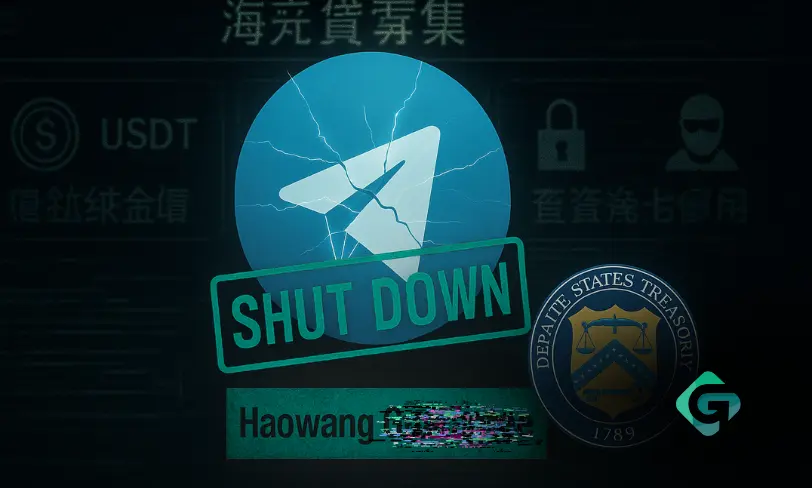
Telegram has since banned accounts linked to Haowang Guarantee, citing breaches tied to fraud and money laundering. Still, the infrastructure remains resilient, expanding its operations under different names and platforms.
Global Reach and Shifting Locations
The fraud industry is not just growing in scale, but also geographically. According to HRC and a recent UN Office on Drugs and Crime (UNODC) report, these scam syndicates are rapidly expanding into regions like Africa, the Middle East, and Latin America.
Originally concentrated in urban centres like Sihanoukville and Phnom Penh, scam operations have since shifted to rural provinces such as Koh Kong, Bavet, and Pursat, where massive compounds have sprung up since 2022. These regions offer lower visibility and looser oversight, making them ideal bases for high-volume fraud activity.
Adding to the concern is a January report from blockchain analytics firm Elliptic, which disclosed that Huione Group had created its own stablecoin. This internal digital currency reportedly allows scammers to conduct transactions entirely outside the traditional financial system, further reducing traceability and regulatory risk.
Government Complicity and International Pressure
The allegations against Cambodia’s political elite have heightened international scrutiny. The scale of the fraud is staggering—$19 billion a year, equivalent to roughly 60% of Cambodia’s GDP. Such numbers raise serious questions about whether the Cambodian state is merely failing to police these operations or is actively complicit.
Jacob Sims describes the state’s support as “systematic and insidious,” warning that political connections are shielding criminal enterprises from oversight. The entanglement of government officials in such high-value fraud schemes creates a climate where accountability is virtually impossible, and criminal networks operate with impunity.
As the scandal unfolds, international agencies and human rights organisations are calling for coordinated sanctions and stronger investigative cooperation to dismantle this crypto-fuelled empire. However, without significant political will within Cambodia, any attempt to rein in these operations may prove ineffective.
Leave a Reply