
Ethereum is experiencing a sharp rise in “blob” usage, a feature introduced with the Dencun upgrade earlier this year, highlighting increased adoption of layer-2 scaling solutions for faster and cost-effective transactions.
What Are Blobs and Why Do They Matter?
Blobs, or binary large objects, allow large chunks of data to be attached to transactions without congesting Ethereum’s main network. Unlike traditional call data, which is stored permanently on-chain, blobs store data off-chain temporarily, making transactions more efficient. This feature, introduced via Ethereum Improvement Proposal (EIP) 4844, is particularly beneficial for layer-2 protocols like BASE, Arbitrum, and Optimism.
Record Blob Usage Signals Growing Adoption
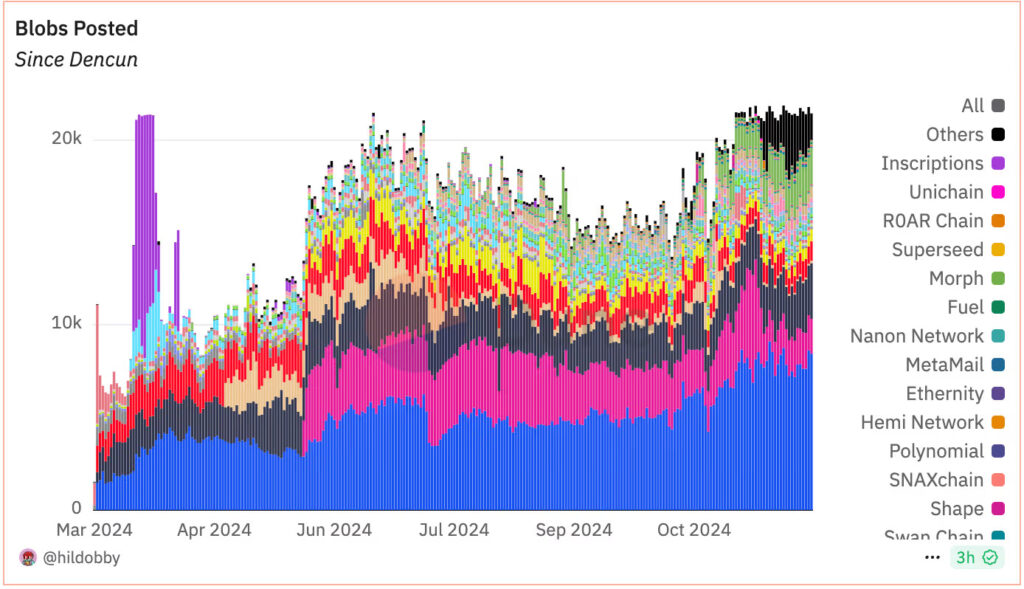
According to analytics from Dune, Ethereum is averaging over 21,000 blobs per month, matching record levels seen in March. The average number of blobs posted per Ethereum block has risen to 4.3, underscoring a growing reliance on this data management tool. The spike is also driving higher on-chain activity, with overall transactions for Ethereum and its layer-2 protocols up by 40% compared to summer.
Blob Fees Reach New Highs
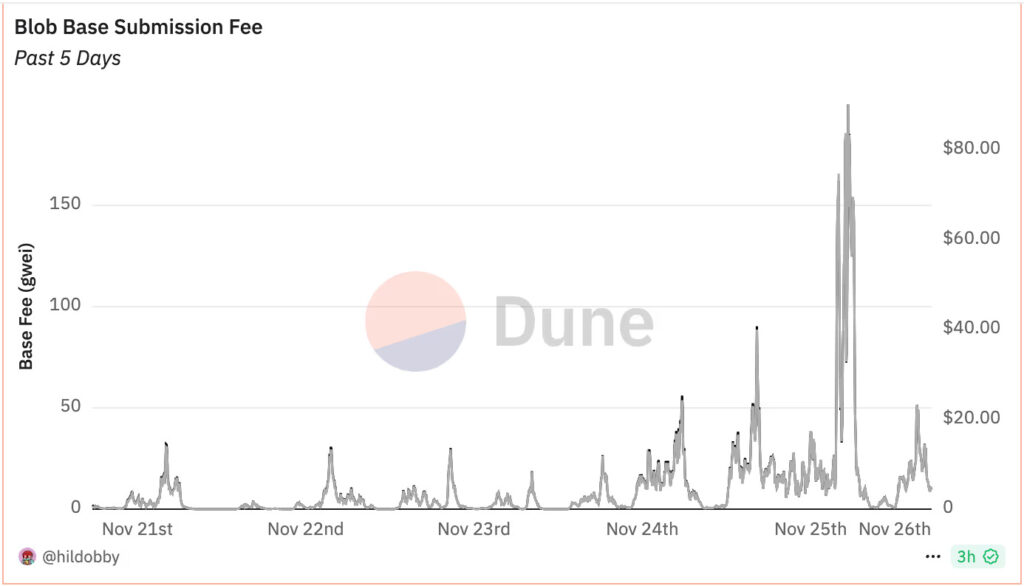
Demand for blobspace—dedicated areas in Ethereum blocks for storing blob data—has led to a surge in fees. The blob base submission fee recently hit $80, the highest since March, with over 166 ETH (worth $560,000) burned in blob fees over the past seven days. This fee-burning mechanism reduces Ethereum’s circulating supply, contradicting the notion that layer-2 solutions are detrimental to the mainchain.
The surge in blob usage has coincided with Ethereum’s strong market performance. Ether recently hit a four-month high of $3,546, outperforming Bitcoin’s 5% decline during the same period, before settling at $3,370. Analysts suggest this trend could position Ethereum for further growth as demand for layer-2 solutions continues to rise.
Leave a Reply