
As cryptocurrency adoption continues to rise, PNC Bank has become the latest major financial institution to embrace digital assets. The American banking powerhouse has announced a new partnership with Coinbase, aiming to offer crypto trading and custody services directly to its clients. This move marks a significant milestone in the growing convergence between traditional banking and digital finance.
The announcement comes just days after the United States signed the GENIUS Act into law, offering long-awaited regulatory clarity for stablecoins and digital asset issuers. PNC’s decision signals growing confidence in the future of crypto among institutional players.
Seamless Access to Crypto via Coinbase
PNC Bank will leverage Coinbase’s Crypto-as-a-Service platform to enable its clients to buy, sell, and hold cryptocurrencies without leaving their PNC accounts. This integration means users will no longer need to use third-party platforms to access digital assets, making the process more secure and streamlined.

Through the partnership, Coinbase will also gain access to some of PNC’s banking infrastructure, deepening the strategic ties between the two firms. William Demchak, Chairman and CEO of PNC Bank, stated that the collaboration “accelerates the bank’s ability to deliver crypto financial solutions” in response to rising client demand.
Coinbase’s Crypto-as-a-Service solution is designed specifically for institutions. It offers a range of services including brokerage, custody, and crypto payment infrastructure. The partnership ensures that even PNC’s institutional clients including corporations and government agencies can now explore crypto with confidence.
Institutional Demand Drives the Shift
According to PNC Bank’s Q2 2025 earnings report, the firm manages $421 billion in client assets, spanning retail, corporate, and institutional clients. The move into crypto is not only a response to individual customer interest but also to the growing institutional appetite for digital asset exposure.
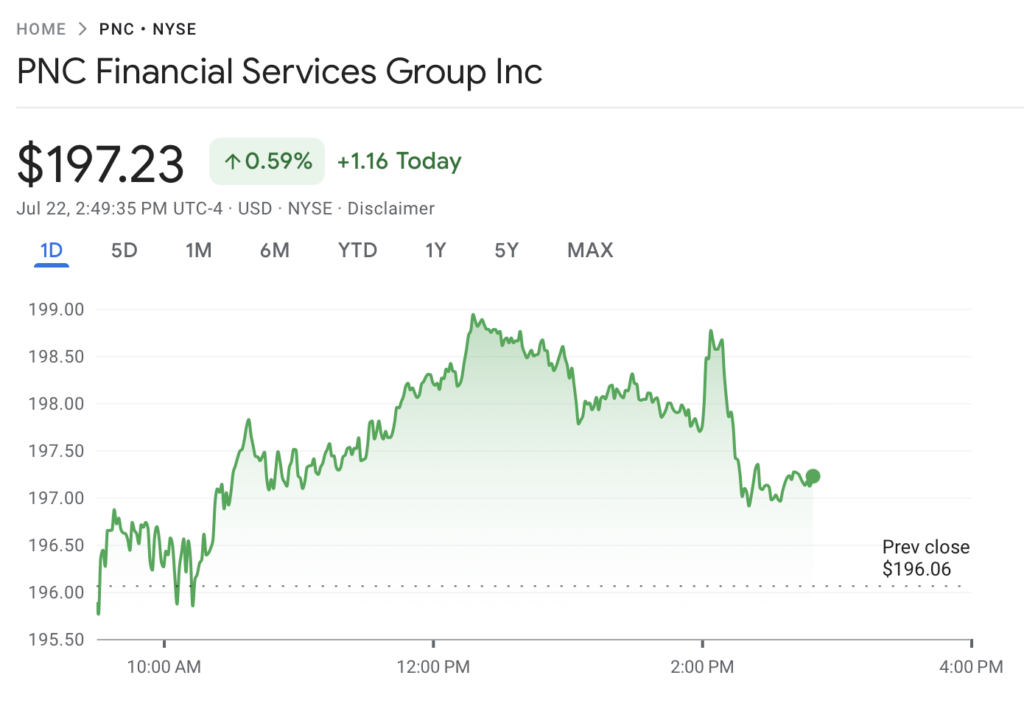
The GENIUS Act, recently signed by former US President Donald Trump, is a key factor in this surge of interest. The new law creates clearer regulations around stablecoins, cryptocurrencies tied to traditional currencies like the US dollar making it safer for banks to interact with digital assets.
Other major banks have followed suit. In recent weeks, JPMorgan Chase, Citigroup, and Bank of America have all announced their own stablecoin initiatives. This momentum suggests that digital assets are no longer fringe experiments, but increasingly central to future banking strategies.
Crypto’s Bullish Moment Continues
The announcement also coincides with a bullish rally in the crypto market. In the last month alone, Bitcoin has risen by 21%, Ether by 70%, and XRP by 81%, according to CoinGecko data. This sharp upward trend has added further urgency for traditional financial institutions to catch up with the pace of innovation in the digital space.
With Congress currently evaluating a broader market structure bill aimed at establishing comprehensive crypto regulations, the future looks increasingly favourable for Web3 development in the US. Clearer rules are encouraging more mainstream players to join the sector, helping to build a more stable and transparent digital economy.
A Sign of the Future
PNC Bank’s partnership with Coinbase is more than just a business move, it is a clear signal that crypto is being woven into the fabric of traditional finance. By simplifying access to digital assets, the bank is meeting modern consumer expectations while positioning itself at the forefront of financial innovation.
As regulation evolves and crypto adoption accelerates, such partnerships are likely to become the norm rather than the exception. With nearly half a trillion dollars under management, PNC’s move could influence other regional and national banks to follow suit, creating a ripple effect across the entire financial landscape.
Leave a Reply