As artificial intelligence (AI) continues to revolutionise the software landscape, its impact on smart contract development within the crypto ecosystem is drawing mixed opinions. Despite earlier warnings about AI-generated code potentially introducing security vulnerabilities, developers and auditors told Cointelegraph that AI is improving overall crypto safety.
AI Still Faces Security Concerns
Concerns surrounding AI-generated code are not unfounded. A November 2024 report by the Center for Security and Emerging Technology warned that AI-assisted programming could pose new cybersecurity risks. The study highlighted that nearly half of the code snippets produced by leading AI models contained bugs, while another July 2024 benchmark revealed that the median secure-code pass rate across 44 vulnerability types was below 35%.
These findings suggest that while AI models can produce functional code, they often fail to detect or resolve critical security flaws, making them risky if used without human oversight. Additionally, researchers warned about the “downstream” effects of buggy code being reintroduced into future model training datasets, compounding the issue over time.
Developers: AI as Assistant, Not Replacement
Despite such concerns, smart contract developers and auditors maintain that AI is proving beneficial, especially when used to assist, not replace, human coders.
0xAw, pseudonymous lead developer at Alien Base, a decentralised exchange on Base, explained that he uses AI mainly for quick reference and basic code generation. “It now works for the really obvious stuff,” he noted, adding that he has begun allowing AI to perform “sanity checks” on his code.
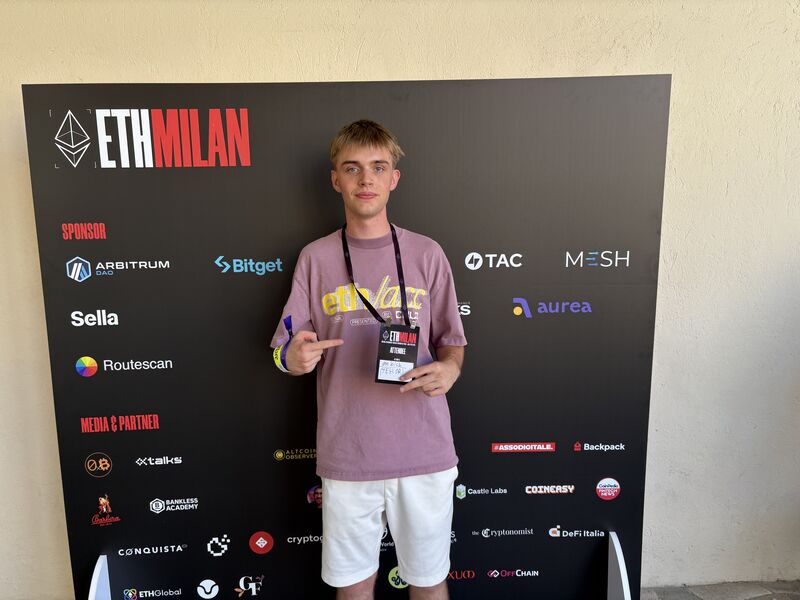
Similarly, Anton Holovchenko, senior blockchain developer at Hacken, uses Cursor for auto-completions and contract templating. “I use it for code structure guidance, but I always adjust and fix what it generates,” he said.
Both developers agree that the use of AI for “vibe coding” a term describing unsupervised, AI-led coding remains dangerous, particularly in high-stakes environments like Web3.
AI Now Commonplace in Web3 Workflows
According to the developers, AI-assisted tools like ChatGPT and Cursor are becoming common in the Web3 space. Holovchenko claims “almost every developer” he knows now uses some form of AI support, primarily for enhancing productivity and code readability.
Blockchain architect Mike Tiutin, CTO at AMLBot, said the adoption rate is “quite high” across the industry. He views AI as a powerful tool, particularly for helping senior developers avoid time-consuming, repetitive tasks.
However, there are limits. 0xAw emphasised that AI-generated code is “too imprecise” to be trusted blindly, especially for critical components of smart contracts. He warned that junior developers, in particular, may become over-reliant on AI and fail to develop the deep coding expertise needed for more senior roles.
AI Expected to Boost Security and Efficiency
Despite its limitations, many in the industry believe AI will ultimately lead to stronger baseline security across protocols. Holovchenko said, “AI can increase the code quality but only in pair with a human who understands the coding.” He believes the combination of AI support and skilled human review will raise development standards across the board.
Tiutin echoed this view, predicting that AI tools will lead to “fewer careless mistakes” and enable audit firms to optimise operations. However, he clarified that audit pricing is unlikely to change significantly, since clients pay for a firm’s reputation rather than the audit work itself.
0xAw added that smart contract development naturally involves multiple layers of testing, refinement, and peer review. “It’s fine,” he said of AI usage. “The process itself weeds out most bugs before deployment.”
AI’s Role in Crypto Hinges on Human Oversight
While AI’s role in coding remains contentious in some circles, smart contract developers are largely confident in its potential to improve the crypto ecosystem, so long as it’s not left unchecked.
Rather than replacing developers, AI is evolving into a valuable co-pilot. Used responsibly, it may well become a critical ally in building more secure and efficient decentralised applications. But as the experts warn, handing over too much control to AI remains a risky proposition.
Leave a Reply