Dr. Xiao Feng, Chairman and CEO of HashKey Group, and widely known as “The Father of China’s Blockchain” believes that China is re-engaging with the crypto space, but carefully and strategically. According to him, the starting point will be stablecoins, not traditional cryptocurrencies like Bitcoin.
In a recent in-depth discussion with Liu Feng, Xiao said there’s currently a “fever” for stablecoins in Hong Kong’s crypto market, while regulators are proceeding with caution. This contrast between market enthusiasm and regulatory conservatism reflects a wider tension across Asia’s emerging digital finance scene.
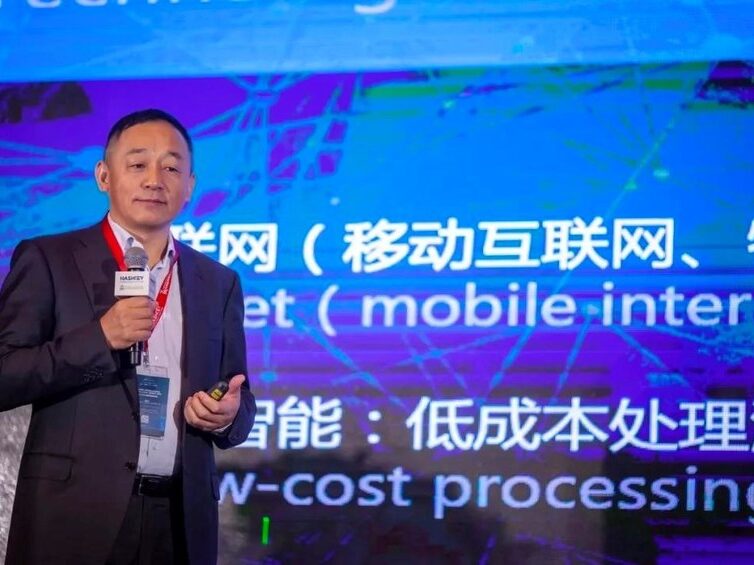
He argued that this interest in stablecoins isn’t simply about payment systems. “People misunderstand their purpose,” Xiao explained. “They weren’t created to buy coffee. Their real value lies in facilitating the trade of volatile crypto assets.”
Blockchain as a New Financial Backbone
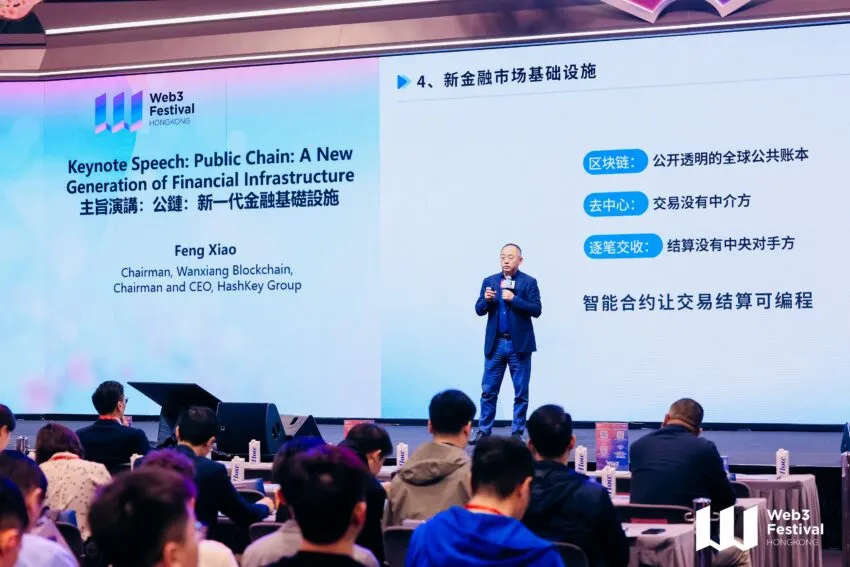
Dr. Xiao believes blockchain isn’t just a tool for digital tokens, it represents an entirely new kind of financial infrastructure. It allows for peer-to-peer, real-time settlements without the need for intermediaries. This can significantly cut transaction costs and increase efficiency across global markets.
“Blockchain is a new method of accounting,” he said. This perspective moves beyond the surface-level excitement about price movements or new coins. Instead, it positions blockchain as the next evolution in global finance, offering transparency, speed, and automation.
According to Xiao, the shift toward stablecoins and eventually Real World Assets (RWA), such as tokenised versions of real estate, commodities, or bonds shows that the market is transitioning from digital-native assets like Bitcoin to digital representations of real-world value.
Compliance is Key: Why Regulation Matters
Xiao stressed that compliance will be essential if this industry is to grow sustainably. In Hong Kong, regulators are heavily focused on Anti-Money Laundering (AML) measures, something that he believes strengthens the city’s position as a serious financial hub.
Interestingly, he noted that crypto could outperform traditional finance in areas like AML. Because every blockchain transaction is recorded and traceable, it offers a level of transparency not easily available in conventional banking.
However, he warned that not all stablecoins are created equal. Only those running on permissionless public blockchains like Ethereum, will thrive. Stablecoins built on permissioned or private consortium chains, often developed by banks or corporate alliances, are unlikely to succeed because they lack the openness required for mass adoption.
Hong Kong’s Role in Asia’s Digital Finance Future
As China subtly re-enters the crypto world, Hong Kong could become its launchpad. Dr. Xiao believes the city is uniquely positioned to serve as the “Wall Street of Asia” due to its legal structure, global connectivity, and its status under China’s “One Country, Two Systems” model.
He compared this with Singapore, which he described as more of a “Switzerland of Asia”, focusing on private wealth and conservative financial innovation. While Singapore offers stability, Hong Kong, in his view, offers scale and access to China.
Looking forward, Xiao envisions a layered future for the crypto industry. The base layer, like blockchain protocols, must remain decentralised and open. But the application layer, where consumers interact with products should be centralised to ensure efficiency, safety, and regulatory oversight.
“This isn’t a contradiction,” he explained. “Decentralisation ensures fairness and openness. Centralisation enables usability and protects users.”
Dr. Xiao’s perspective offers a grounded yet visionary outlook on crypto’s next chapter in Asia. By starting with stablecoins and gradually moving toward tokenised real-world assets, China appears to be crafting a measured return to the blockchain space, one that prioritises infrastructure, compliance, and long-term value over hype.
If his predictions prove accurate, the next few years could see Hong Kong rise as a central hub for regulated crypto innovation, bridging East and West while reshaping global financial systems.
Leave a Reply