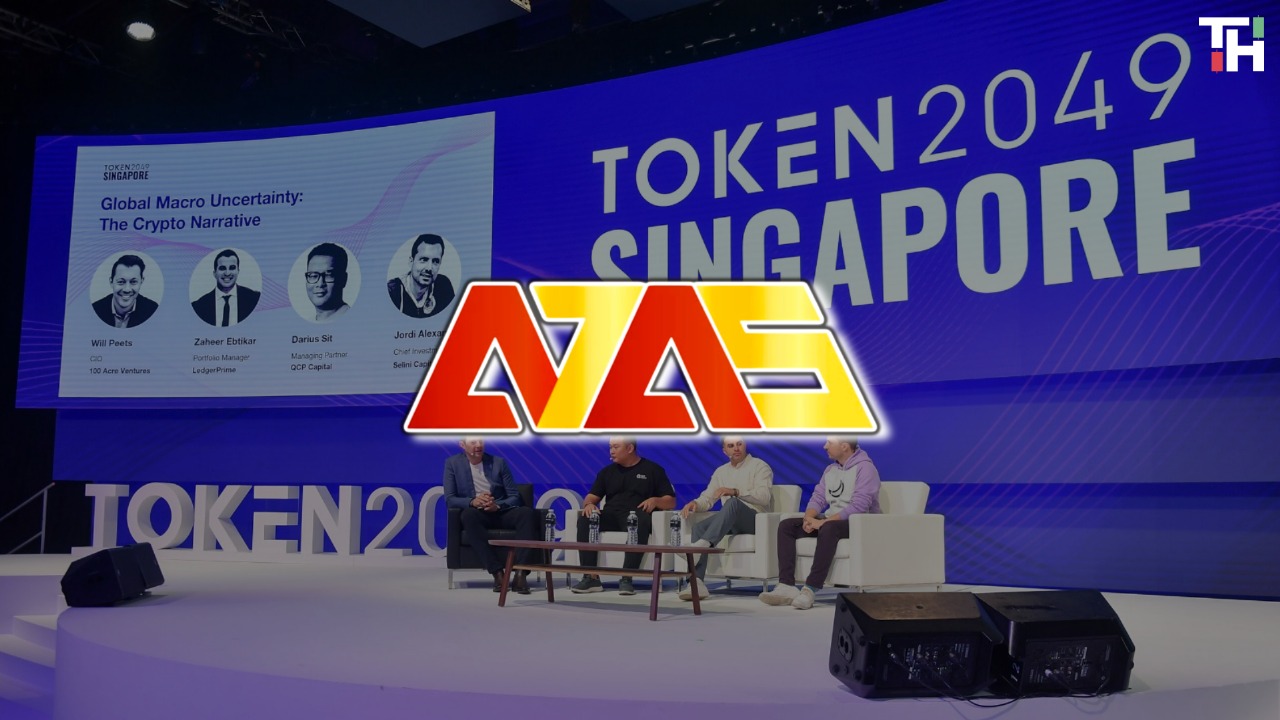
A7A5, a ruble-backed stablecoin issuer tied to Russia’s state-owned Promsvyazbank (PSB), has become the centre of a major compliance storm after appearing as a sponsor at Token2049, Singapore’s most prominent cryptocurrency conference. The controversy erupted because PSB has been sanctioned by multiple Western countries, including the United States, the United Kingdom, and Singapore, for its role in financing Russia’s defence sector amid the ongoing war in Ukraine.
Despite these sanctions, A7A5 was able to legally sponsor and participate in the event, raising pressing questions about the limits of sanctions enforcement and the growing tension between regulatory frameworks in Singapore and Hong Kong.
How A7A5 Slipped Through the Sanctions Net
The key to A7A5’s surprising presence lies in the nuances of jurisdiction. While Token2049 was held in Singapore, the event is organised by BOB Group, a Hong Kong-registered company. As a special administrative region, Hong Kong follows Beijing’s foreign policy stance, which notably does not enforce Western sanctions on Russian entities.
This distinction provided a legal loophole through which A7A5, despite its close association with a sanctioned Russian defence bank, could still appear as a sponsor. Under Hong Kong law, the organisers were not violating local regulations, even though the same act would likely breach Singapore’s Monetary Authority of Singapore (MAS) sanctions framework.

Singapore’s MAS issued Notice SNR-N01 in March 2023, formally prohibiting any financial entities or crypto service providers in the country from engaging with PSB or any affiliated entities. Since A7A5’s reserves are reportedly held at PSB, this notice should have effectively barred it from participating in any financial or promotional capacity within Singapore’s jurisdiction.
However, because Token2049’s commercial dealings were technically handled via a Hong Kong entity, A7A5’s sponsorship skirted direct enforcement, a perfect example of how sanctions enforcement can blur across international boundaries.
Sponsors Caught in a Compliance Dilemma
The sponsorship did not go unnoticed. Several attendees and fellow sponsors described A7A5’s participation as a “compliance nightmare.” One company representative reportedly said they “had a heart attack” after spotting A7A5’s logo on the event’s official sponsor list.

The backlash was swift. Token2049 organisers quietly removed references to A7A5 from the event’s website after concerns mounted, though the Internet Archive still shows A7A5’s listing as a sponsor. Meanwhile, the stablecoin issuer continued to boast of its involvement on social media, even claiming to have sponsored the event’s “massage zone” a tongue-in-cheek promotional area described as a place “where deals are closed while you unwind.”
Neither BOB Group nor the Monetary Authority of Singapore responded to repeated requests for comment. However, legal experts have suggested that while BOB Group’s actions may have been technically lawful under Hong Kong jurisdiction, they undermine Singapore’s sanctions regime and raise concerns about the ease with which sanctioned entities can leverage multi-jurisdictional setups to maintain global visibility.
The Broader Implications for Global Crypto Regulation
The A7A5 incident underscores a growing compliance challenge within the global crypto ecosystem. As digital assets transcend borders, traditional sanctions frameworks struggle to maintain effectiveness. Events like Token2049, which draw participants, sponsors, and speakers from around the world, often operate in regulatory grey zones where local enforcement is inconsistent or unenforceable.
For Singapore, the episode highlights the limitations of its sanctions enforcement when dealing with entities that exploit offshore structures. For the global crypto industry, it’s a reminder that compliance risk extends far beyond direct financial transactions. Even brand association or sponsorships with sanctioned entities can carry reputational and regulatory consequences.

Moreover, the presence of Oleg Ogienko, A7A5’s Director for Regulatory and Overseas Affairs, who spoke at the event, further emphasised the defiance of sanctions norms. While U.S.-aligned speakers like Bo Hines, former White House Crypto Policy Director and now a Tether executive, praised U.S.-backed stablecoins as instruments of “dollar hegemony,” Ogienko delivered a markedly different message, advocating financial sovereignty through ruble-backed digital assets.
This juxtaposition laid bare the geopolitical undercurrents shaping the stablecoin landscape, where competing national interests are increasingly reflected in the design and deployment of digital currencies.
Sanctions, Sovereignty, and the Future of Stablecoins
The A7A5 controversy reveals how cryptocurrencies and stablecoins have become instruments of geopolitical strategy, not just tools of digital finance. For Russia, ruble-backed stablecoins like A7A5 serve as vehicles to bypass Western restrictions, maintaining cross-border trade despite banking sanctions. For regulators, they represent a new frontier in sanctions enforcement, one that’s far more complex than traditional finance.
While A7A5’s sponsorship of Token2049 may have been legally permissible in Hong Kong, it has exposed the fragility of global compliance networks and the ease with which sanctioned entities can find platforms for international visibility.
As crypto continues to globalise, regulators will likely face increasing pressure to coordinate cross-border sanctions enforcement, ensuring that events like Token2049 do not become inadvertent stages for sanctioned actors to promote their financial tools.
Leave a Reply