
Majority of Blocks Carried Out Since 2023
Stablecoin issuer Tether has frozen about $4.2 billion worth of its USDt tokens over the past three years, citing links to suspected criminal activity. The company disclosed the figure in comments to Reuters, noting that most of the restrictions were imposed from 2023 onward as global authorities stepped up enforcement against crypto related fraud and sanctions evasion.
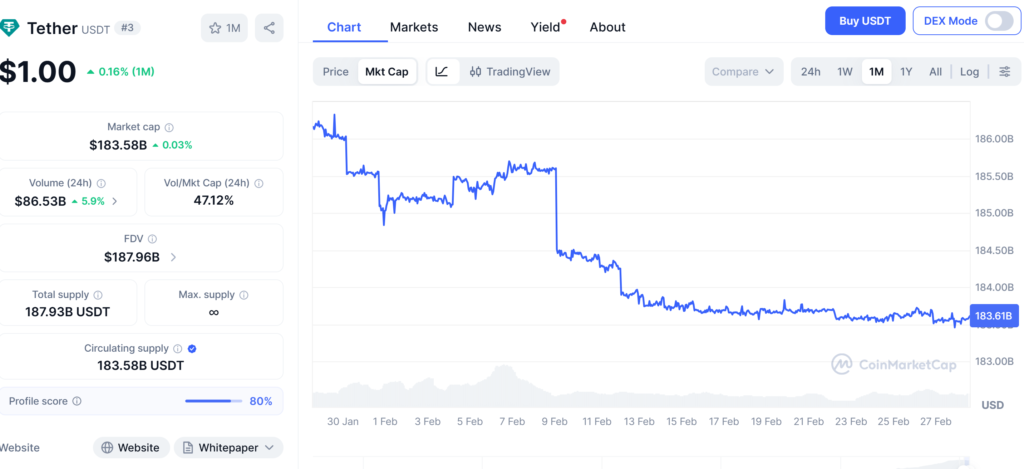
USDt, which is pegged to the US dollar, remains the largest stablecoin in circulation. More than $180 billion worth of tokens are currently outstanding, a sharp rise from roughly $70 billion three years ago. The growth has made Tether an increasingly important player in the digital asset market, and a frequent point of contact for regulators tracking suspicious flows of funds.
How Tether Freezes Funds on Chain
Tether has the ability to freeze tokens directly on the blockchain by blacklisting wallet addresses. When law enforcement agencies flag addresses suspected of being involved in scams, money laundering, or sanctions violations, the company can restrict transfers from those wallets.
The approach has drawn both praise and criticism. Supporters argue it demonstrates that stablecoins can offer compliance tools comparable to traditional banking. Critics, however, say the ability to block funds undercuts the censorship resistant ethos often associated with cryptocurrencies.
Cooperation With US and Turkish Authorities
Earlier this week, Tether said it assisted the US Department of Justice in seizing nearly $61 million in USDt tied to so called pig butchering scams. In such schemes, fraudsters build relationships with victims over time before convincing them to invest or transfer money, often through fake crypto platforms.
In a separate case this month, Tether froze around $544 million in digital assets at the request of Turkish authorities. The funds were linked to an alleged illegal online betting and money laundering operation, according to the company.
Blockchain analytics firm Elliptic reported that by late 2025, major stablecoin issuers including Tether and Circle had blacklisted roughly 5,700 wallets holding about $2.5 billion in total. Around three quarters of those addresses were holding USDt at the time they were frozen.
USDt Supply Contracts Amid Market Shifts
At the same time, USDt’s circulating supply has declined in recent months. Blockchain data shows the token is on track for its largest monthly contraction in three years, with supply falling by about $1.5 billion in February after a $1.2 billion drop in January.
The pullback mirrors market conditions seen after the collapse of FTX in late 2022, when liquidity tightened across the crypto sector. Some analysts view the current contraction as a signal of cautious sentiment among traders and institutions.
Tether has pushed back against suggestions of weakening demand. The company said the figures reflect short term distribution changes rather than a structural decline in interest. It also noted that USD Coin experienced a multibillion dollar reduction in supply over the same period.
Stablecoin Issuers Under Growing Scrutiny
As stablecoins play a larger role in global crypto markets, issuers are facing increasing expectations from governments to monitor and restrict illicit activity. The freezing of billions of dollars in USDt underscores how central stablecoin providers have become in enforcement efforts.
With supply fluctuations and regulatory oversight intensifying, Tether’s actions are likely to remain in focus as policymakers weigh the future framework for digital dollar tokens.
Leave a Reply