
MoU Signed to Deepen Digital Trade Cooperation
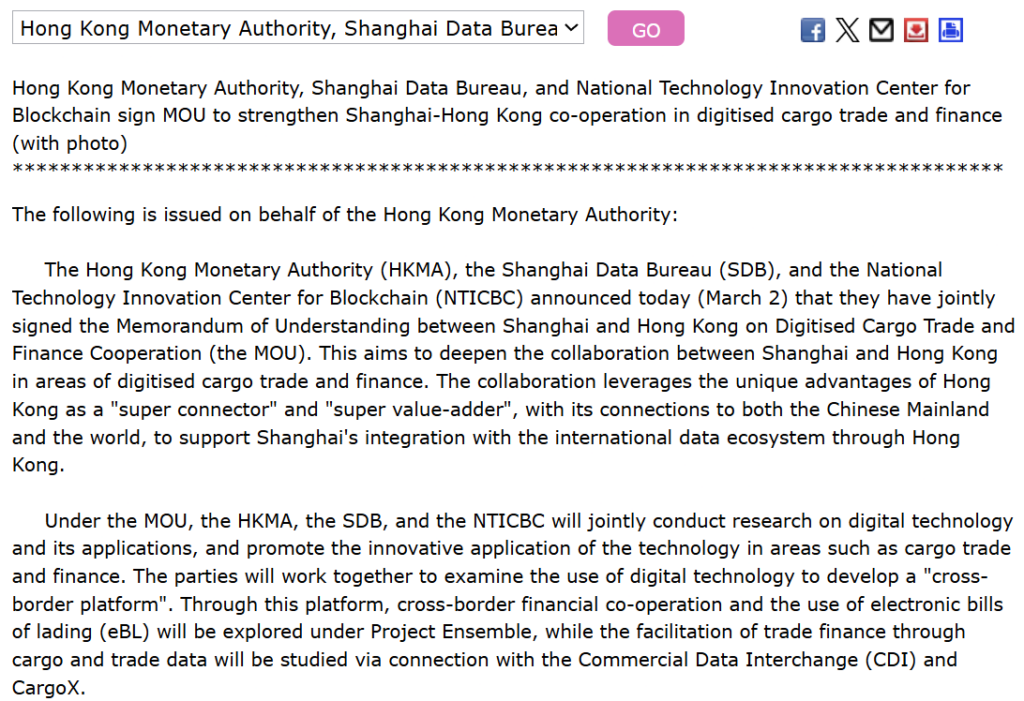
Hong Kong and Shanghai have taken a fresh step toward modernising trade finance by agreeing to test blockchain technology for cross-border cargo documentation and financing. The Hong Kong Monetary Authority, the Shanghai Data Bureau and the National Technology Innovation Center for Blockchain have signed a memorandum of understanding to strengthen cooperation in digitising cargo trade and related financial services.
The agreement sets the stage for joint research into a blockchain-based cross-border platform that would connect trade data, electronic bills of lading and financial applications. The initiative will operate under the HKMA’s Project Ensemble, launched in 2024 to explore tokenised market infrastructure and new digital systems for financial services.
Focus on Blockchain-Based Trade Finance Platform
At the core of the partnership is a study on how blockchain can simplify and secure the exchange of trade information between the two cities. The proposed platform aims to interlink cargo trade data with electronic bills of lading and financing tools, potentially reducing paperwork, cutting processing times and improving transparency.
Authorities believe that connecting verified trade data directly with financial institutions could make trade finance more efficient. The research will assess how blockchain can support real-time data sharing while maintaining data integrity and security across borders.
Leveraging Commercial Data Interchange and Project CargoX
The collaboration will build on Hong Kong’s existing blockchain infrastructure. The HKMA plans to use its Commercial Data Interchange, launched in 2022, as the technical backbone for the project. The platform was designed to allow financial institutions secure access to corporate data, helping streamline loan approvals and risk assessments.
Officials will also draw from Project CargoX, another HKMA initiative built on the Commercial Data Interchange. Project CargoX focuses on enhancing trade data capabilities to support financing and related services. By integrating cargo and commercial data into financial workflows, authorities hope to strengthen trade finance services for businesses operating between Hong Kong and Shanghai.
Howard Lee, deputy chief executive of the Hong Kong Monetary Authority, described the memorandum as an important step in expanding digital innovation cooperation between the two cities. He said both sides aim to encourage wider use of digital tools in cargo trade and finance while exploring infrastructure that can link Shanghai and Hong Kong more closely.
Shao Jun, director of the Shanghai Data Bureau, said the partnership reflects Shanghai’s commitment to building a secure, efficient and open digital infrastructure powered by data and technological progress.
Broader Push for Digital Asset Policy Reform
Alongside efforts in trade finance, Hong Kong is advancing changes to its digital asset policies. In a separate policy discussion, Hui Ching-yu, Secretary for Financial Services and the Treasury, outlined proposals to expand tax concessions for investment funds and family offices to include digital assets.
Speaking at a Legislative Council Financial Affairs Committee meeting, Hui said the government plans to add digital assets to the list of qualifying investments under existing tax exemption regimes. If approved, profits derived from eligible digital asset holdings within these structures would be exempt from tax.
The proposal is part of Hong Kong’s broader strategy to strengthen its position as a financial hub by attracting global capital, including investors active in digital assets.
Strengthening Hong Kong-Shanghai Financial Links
The new blockchain research project and the digital asset tax proposal highlight Hong Kong’s continued focus on digital finance. By combining trade data infrastructure with blockchain tools, authorities aim to improve efficiency in cargo trade financing while supporting broader financial sector development.
The collaboration with Shanghai signals a growing interest in cross-border digital integration between major Chinese financial centres. If successful, the project could serve as a model for further regional cooperation in digital trade infrastructure.
Leave a Reply