
Bitcoin infrastructure developer Babylon Labs has partnered with hardware wallet manufacturer Ledger to expand the use of Bitcoin vaults for financial applications while allowing users to retain control of their assets. The collaboration enables Ledger devices to sign transactions for Babylon’s Trustless Bitcoin Vaults, commonly known as BTCVaults, marking a step toward making Bitcoin more functional in decentralized financial systems.
The integration is expected to help Bitcoin holders participate in lending, staking and other financial activities without transferring custody of their funds to third parties.
Ledger Devices to Secure BTCVault Transactions
Under the new integration, Ledger hardware wallets will serve as the signing layer for BTCVault transactions. This means users will be able to approve interactions with Babylon’s vaults directly through their Ledger devices while keeping their private keys offline.
BTCVaults allow users to lock Bitcoin into programmable contracts that operate according to onchain rules. Even though the assets are locked for specific financial strategies, users still maintain ownership and direct control over their funds.
By combining Babylon’s vault system with Ledger’s hardware security, the partnership aims to offer a safer method for interacting with decentralized finance applications.
Clear Signing Adds Transaction Transparency
The vault interaction will rely on Ledger’s Clear Signing technology. The feature displays full transaction details in a human readable format on the hardware wallet screen before a user approves it.
This helps users verify exactly what they are authorizing before signing a transaction. In crypto ecosystems, where malicious or misleading transaction requests can occur, such transparency reduces the risk of accidentally approving harmful operations.
Clear Signing has become an important security layer for hardware wallets, particularly as decentralized finance transactions become more complex.
Growing Interest in Self Custodial Crypto Vaults
Digital asset vaults are gaining attention as more investors look for ways to generate returns on their holdings without depositing funds with centralized platforms.
Traditional crypto services often require users to transfer assets to exchanges or custodial platforms that control the private keys. In contrast, self custodial vaults operate through smart contracts and allow users to maintain ownership while participating in financial activities.
These vaults can support multiple strategies, including lending, staking and automated yield generation.
DeFi Vault Strategies Gain Wider Adoption
Vault based strategies have been a key part of decentralized finance for several years. Platforms such as Yearn Finance helped popularize automated yield vaults that allocate user deposits across lending pools and liquidity markets to maximize returns.
More recently, large platforms are experimenting with similar concepts. Messaging platform Telegram introduced vault style yield products within its integrated crypto wallet. The service allows users to deposit assets like Bitcoin, Ether and Tether’s USDt into structured strategies designed to generate yield.
Institutional interest is also increasing. Asset manager Bitwise recently partnered with DeFi lending protocol Morpho to develop curated onchain vault strategies focused on generating returns through overcollateralized lending markets.
Ledger’s Scale Could Boost Adoption
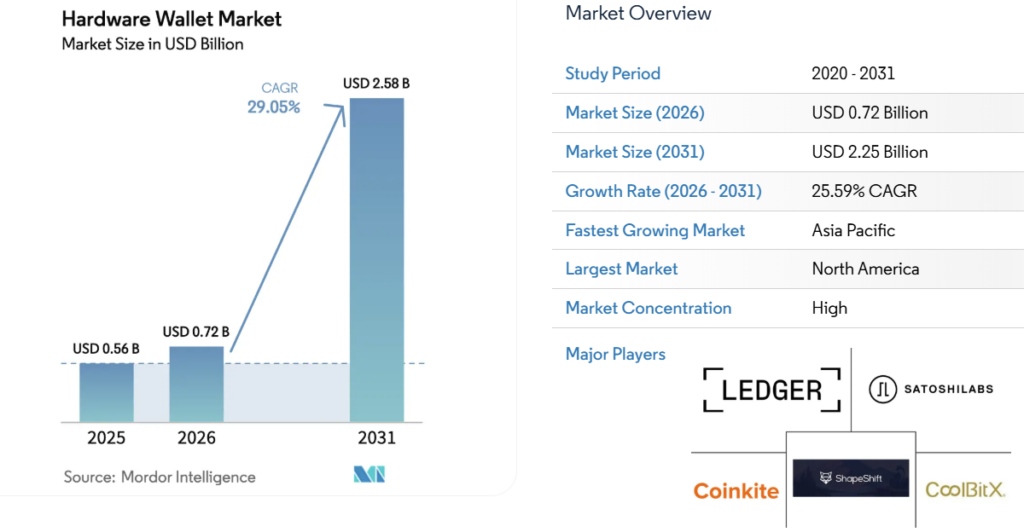
The collaboration may also gain traction because of Ledger’s large user base. The hardware wallet maker reports selling more than 8 million devices globally, giving it a significant footprint in the crypto ecosystem.
If widely adopted, the integration could encourage more Bitcoin holders to explore decentralized financial services while maintaining self custody of their assets.
Meanwhile, Ledger itself is exploring broader expansion plans. Reports suggest the company has been in discussions with major financial institutions regarding a potential initial public offering in the United States.
As Bitcoin infrastructure evolves, partnerships such as the one between Babylon and Ledger highlight the growing effort to combine security, self custody and financial utility within the digital asset ecosystem.
Leave a Reply