Trudeau’s Resignation Paves Way for Pro-Crypto Opposition Leader
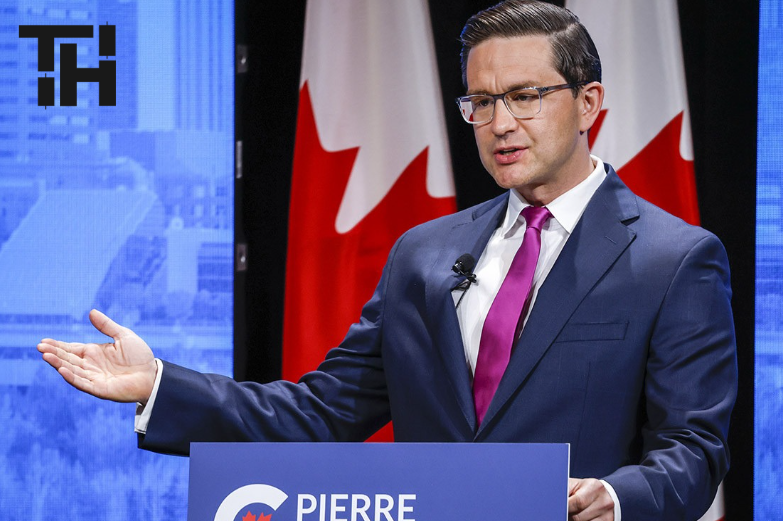
Canadian Prime Minister Justin Trudeau’s announcement of his resignation has shifted attention to Pierre Poilievre, the opposition leader and Conservative Party frontrunner, who has previously championed cryptocurrency and blockchain technology.
A Vision for a ‘Crypto Capital’
In a recently resurfaced video from a March 2022 campaign event, Poilievre can be seen purchasing a chicken shawarma with Bitcoin. During the event, he unveiled his ambition to make Canada the “blockchain and crypto capital of the world.”
In his speech, Poilievre criticised the central banking system and Canada’s regulatory framework for cryptocurrencies. He argued that Bitcoin could help Canadians “opt out” of inflation, a comment that later became the subject of attack ads by Trudeau’s Liberal Party, especially after the crypto market’s sharp decline in late 2023.
Since becoming the leader of the Conservative Party in 2022, Poilievre has continued to push a pro-crypto agenda. In several 2022 posts on X (formerly Twitter), he promised “freedom for buyers and sellers” to use Bitcoin and other technologies. He has also strongly opposed the introduction of a central bank digital currency (CBDC), calling the Bank of Canada “financially illiterate” and pledging to halt any risky CBDC projects.
In April 2024, Poilievre backed a bill to ban a central bank digital currency and protect the use of physical cash, further solidifying his stance against state-controlled digital currencies.
Crypto Investments and Criticism
Poilievre’s financial disclosures in May 2022 revealed that he held shares in the Purpose Bitcoin Exchange-Traded Fund (ETF), a local spot Bitcoin ETF. However, reports suggest these holdings were no longer listed by November 2023.
While his pro-crypto stance has resonated with some, it has also drawn criticism, particularly during periods of market volatility. The Liberal Party has frequently attacked his crypto policies, suggesting they pose risks to Canada’s financial stability.
Trudeau’s Resignation and Political Shake-Up
Trudeau announced on 6 January that he would step down as the Liberal Party leader and, consequently, as prime minister, once his party selects a replacement. His resignation follows growing internal conflict over his handling of the national deficit and concerns about his ability to address impending tariffs promised by US President-elect Donald Trump.
Parliament, currently suspended until 24 March, is expected to see the Liberals vote for a new leader before then. Trudeau also faced the looming threat of a no-confidence motion later this month, which likely expedited his decision to step aside.
Election Outlook
Canada’s next federal election must be held by 20 October. To form a majority government, a party needs to secure at least 172 of the 343 available seats in the House of Commons.
Recent polling by CBC News shows the Conservative Party holding a commanding 24-point lead over the ruling Liberals, with a 98% chance of securing a majority. This puts Poilievre in a strong position to become Canada’s next prime minister.
As the election approaches, Poilievre’s pro-crypto vision could become a defining issue, potentially reshaping the country’s financial policies and positioning Canada as a global leader in blockchain and cryptocurrency innovation.
Leave a Reply