
New Zealand has taken a bold step to fight money laundering and financial crime by banning crypto ATMs and capping international cash transfers. The move, announced by Associate Justice Minister Nicole McKee, is part of a wider reform to the country’s Anti-Money Laundering and Countering the Financing of Terrorism (AML/CFT) regime. The government says the crackdown is focused on criminals and aims to stop the misuse of financial systems while still supporting law-abiding businesses.
Crypto ATMs Banned Nationwide
As part of the reform, New Zealand will completely ban crypto ATMs across the country. These kiosks allow users to convert cash into cryptocurrencies like Bitcoin quickly and often anonymously, an attractive method for criminals to move illicit funds.
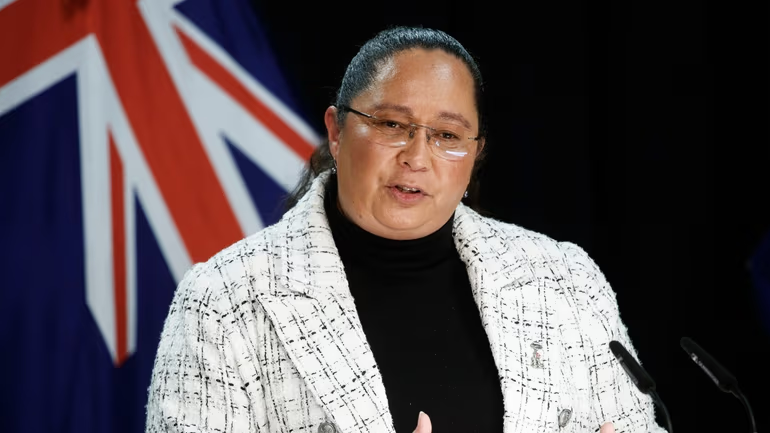
Minister Nicole McKee stated clearly that the government wants to “make it more difficult for criminals to convert cash to high-risk assets such as cryptocurrencies.” Officials believe crypto ATMs have become a tool for organised crime groups to funnel money overseas for drug deals and fraud.
A recent report by the Ministerial Advisory Group on Transnational, Serious and Organised Crime confirmed this trend. Criminals have been using crypto ATMs as a fast and discreet way to shift large amounts of money offshore.
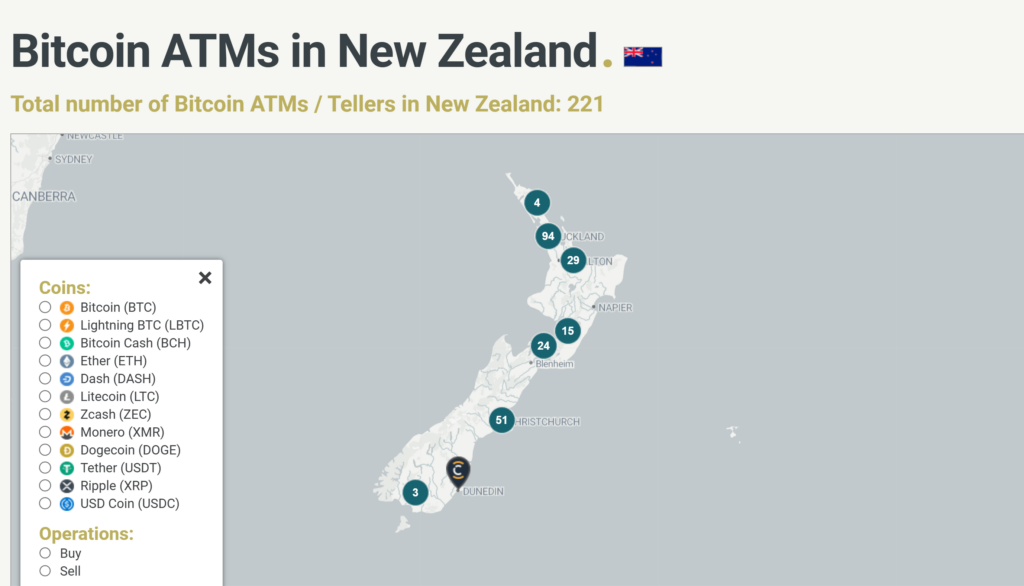
Currently, data from Coin ATM Radar shows more than 220 crypto kiosks operating across New Zealand. Under the new law, these will be shut down permanently.
New $5,000 Cap on International Cash Transfers
Alongside the ATM ban, New Zealand has also introduced a $5,000 cap on international cash transfers. This rule aims to limit the flow of potentially illegal funds across borders.
By capping how much cash can be sent abroad, the government hopes to make it harder for criminals to move large sums without detection. This limit will particularly impact cash-based transfers, which are often harder to trace than digital or bank-based payments.
These steps form part of a broader government push to tighten financial surveillance and close loopholes in the system.
More Power for Financial Intelligence Unit (FIU)
The Financial Intelligence Unit (FIU) will also receive expanded powers under the new reforms. The FIU will be able to request more ongoing information from banks and other financial service providers about individuals involved in suspicious activity.
This change means that authorities can monitor high-risk individuals more closely and respond more effectively to criminal behaviour in the financial system.
Importantly, the government says these powers will be used to target criminals, not burden honest businesses. “This Government is serious about targeting criminals, not tying up legitimate businesses in unnecessary red tape,” McKee said.
Balancing Security and Business Need
Two key AML reform bills are already in parliament and are expected to pass before the end of the year. These bills aim to both strengthen anti-crime measures and ease compliance pressure on law-abiding businesses.
Minister McKee emphasised that these reforms are about being smart with regulations. “This is not about dropping standards, it’s about applying them intelligently,” she said.
The government’s goal is to create a system that is both tough on crime and practical for everyday businesses.
Global Trend of Crypto ATM Crackdowns
New Zealand is not alone in this crackdown. Other countries are also stepping up efforts to regulate crypto ATMs:
- In Australia, financial watchdog AUSTRAC recently imposed stricter rules for crypto ATM operators, including a cap of 5,000 Australian dollars on cash deposits and withdrawals, better customer checks, and stronger monitoring systems.
- In the United States, the city of Spokane, Washington, has gone a step further by completely banning crypto ATMs. Local authorities cited increasing cases of scams, especially in low-income communities, as the reason for the ban.
This global trend shows a growing concern over the misuse of crypto ATMs for fraud, money laundering, and other financial crimes.
New Zealand’s ban on crypto ATMs and its strict new limits on international transfers mark a significant shift in the country’s fight against organised crime. By closing off easy routes for laundering cash into crypto, the government is sending a clear message: New Zealand is no longer a safe haven for financial crime.
Leave a Reply