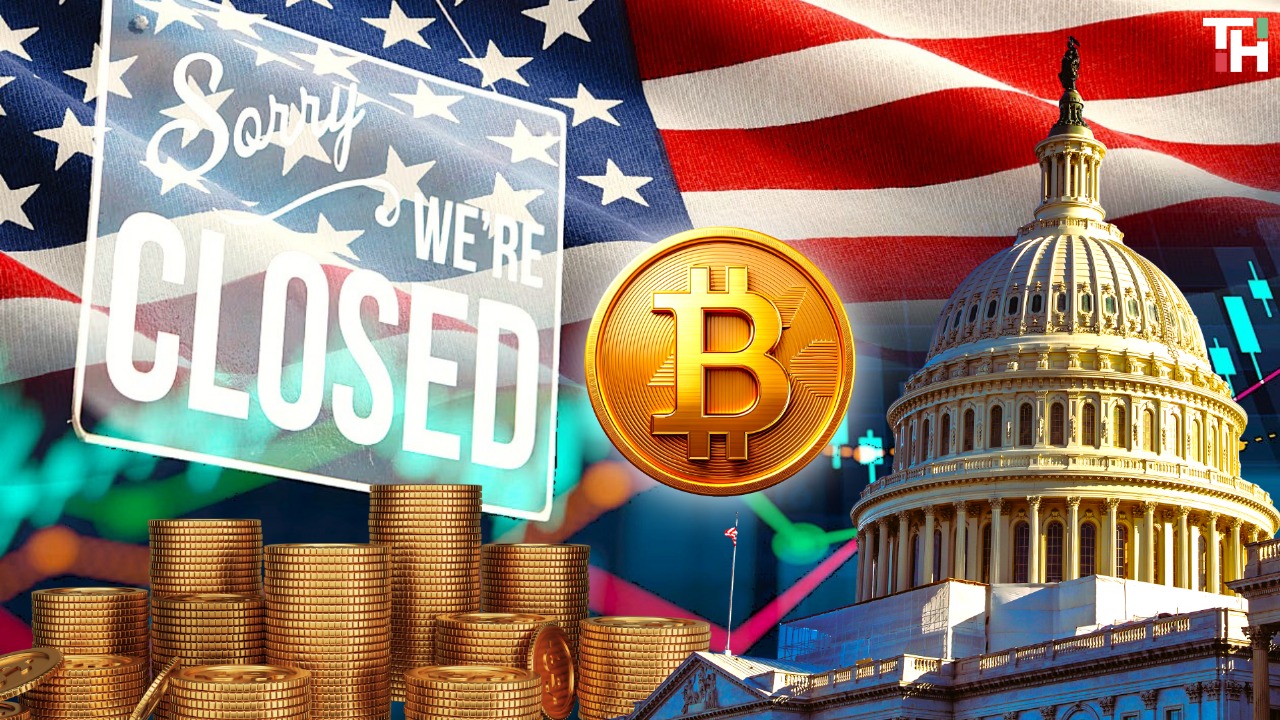
The United States has entered day 37 of its longest-ever government shutdown, surpassing the 35-day record from 2018–2019. What began as a dispute over Affordable Care Act subsidies and spending cuts has now escalated into a full-scale freeze on federal operations.
While the political standoff has rattled markets and disrupted public services, the crypto industry finds itself among the biggest collateral victims. For a sector that had finally begun to see regulatory clarity after years of uncertainty, the timing couldn’t be worse.
The shutdown arrives in what was expected to be crypto’s most pivotal year yet, following the passage of the GENIUS Act and several landmark bills designed to embed digital assets into the U.S. financial framework. Now, progress is at a standstill.
A Regulatory Blackout: SEC and CFTC Grind to a Halt
Two of the most critical agencies for the digital asset industry, the U.S. Securities and Exchange Commission (SEC) and the Commodity Futures Trading Commission (CFTC), are effectively paralysed. Both are operating with less than 6% of their staff, enough only to handle essential functions.
This near-total shutdown has paused enforcement actions, rulemaking, and approvals. For crypto, this means no new clarity, no new ETF decisions, and no progress on pending frameworks.
As analysts describe it, the industry has entered a “regulatory blackout,” one that could extend well into 2026 if political deadlock continues. Without functioning oversight, markets are left to navigate on autopilot, and firms seeking compliance pathways have nowhere to turn.
Crypto Bills and ETFs in Limbo
The shutdown’s ripple effects are most visible in the pile-up of stalled crypto legislation and ETF approvals.
The CLARITY Act
The CLARITY Act, a bipartisan bill meant to divide oversight between the SEC and CFTC, was hailed as a cornerstone of U.S. digital asset reform. It successfully passed the House in July 2025, and the Senate had been preparing to finalise it before year-end. Now, all negotiations are suspended.
Prediction markets have slashed the odds of 2025 passage to just 25%, suggesting that 2026 is now the earliest realistic window for final approval.
Altcoin ETF Approvals
Sixteen spot altcoin ETFs, including those tracking Solana (SOL) and XRP, were awaiting final SEC approval this month. Analysts had expected a wave of greenlights following the Bitcoin ETF success earlier this year.
However, with the SEC’s Corporation Finance division largely furloughed, these filings are frozen. If the government reopens soon, approvals could resume by November; if not, the window could slip into 2026.
CFTC’s Spot Crypto Framework
The CFTC’s proposed rules for spot crypto trading and tokenised collateral, announced in August, were intended to give digital assets a regulated path comparable to commodities. That effort, too, is on ice, halting what was seen as a landmark reform for market integrity.
GENIUS Act Delays and Project Crypto Paused
The GENIUS Act, signed into law in July, was meant to usher in the first comprehensive federal framework for stablecoins. But with key agencies such as the Treasury, OCC, FDIC, and FinCEN operating at reduced capacity, its implementation is indefinitely delayed.
The earliest projections now place the rollout at January 2027, two years later than planned.
Adding to the list of casualties is “Project Crypto”, an SEC-led initiative unveiled by Chairman Paul Atkins to modernise securities laws for blockchain-based assets. The plan promised to integrate tokenised instruments into mainstream finance, reform 401(k) crypto access, and reconsider leverage rules. All of that has now been shelved.
The rollback of SAB 121, a rule that discouraged banks from offering crypto custody services, also remains unfinished. Financial institutions eager to enter digital asset markets are now stranded without supervisory guidance.
Falling Behind: Global Competitors Surge Ahead
Beyond the immediate paralysis, the long-term concern is strategic. Every day the shutdown continues, the U.S. risks ceding its regulatory leadership in digital assets to other jurisdictions.
Regions such as Hong Kong, the European Union, and the UAE are already implementing comprehensive crypto frameworks, offering both clarity and competitiveness to global firms.
Meanwhile, the White House’s Digital Assets Council, which had been exploring ideas such as Bitcoin reserves and DeFi safeguards, has gone silent. Even informal consultations have stalled as furloughed staff await direction.
If the shutdown lifts soon, observers expect a flood of delayed actions, ETF approvals, rulemaking updates, and executive guidance, before Thanksgiving. But if Washington remains dark into December, the defining reforms of 2026 may be pushed back even further.
Conclusion: A Lost Year for U.S. Crypto
For now, America’s digital asset sector stands frozen in place, a victim not of market forces, but of political paralysis. What was shaping up to be a breakthrough year for U.S. crypto regulation has instead turned into a waiting game.
Until the government reopens, the message to investors, innovators, and institutions is clear: regulatory certainty will have to wait, and the rest of the world won’t.
Leave a Reply