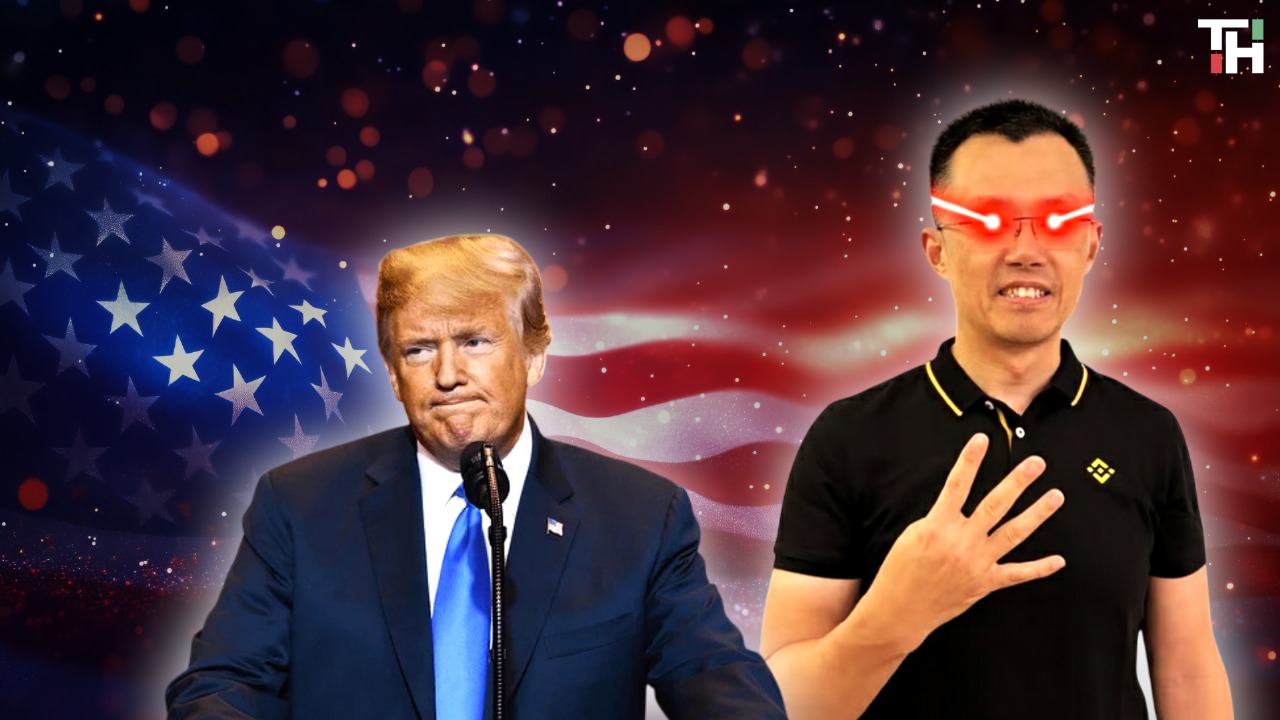
Binance founder Changpeng Zhao (CZ) has broken his silence following his unexpected pardon by former U.S. President Donald Trump, firmly denying any suggestion that the move was linked to political or business dealings with the Trump family. Speaking in an exclusive interview on FOX News Special Report on November 7 (EST), CZ described the pardon as “completely unexpected” and insisted it had “no commercial or political conditions attached.”
The comments come amid intense scrutiny after Trump’s controversial decision on October 23, 2025, to overturn CZ’s 2023 money-laundering conviction, a case that led to CZ’s resignation as Binance CEO and a record $4.3 billion fine imposed by U.S. regulators.
“I was surprised by the decision,” CZ told FOX. “I respect the rule of law and the institutions that uphold it. This was an unprecedented move, but it was not connected to any negotiation or deal involving myself or Binance.”
No Business Ties with the Trumps, Says CZ
CZ categorically rejected allegations that Binance or any of its subsidiaries had financial links with Trump’s family or their crypto enterprise, World Liberty Financial, which was founded by Donald Trump Jr. and Eric Trump in 2024.
“There are no business or financial ties between myself, Binance, or the Trump family,” CZ said. “Claims of any relationship or coordination with World Liberty Financial are false.”
Rumours had circulated in Washington and across crypto forums suggesting that Binance invested $2 billion into MGX Group, an Abu Dhabi-based entity reportedly associated with Trump’s USD1 stablecoin project under World Liberty Financial. Critics alleged this may have influenced Trump’s decision to grant the pardon. However, no evidence has surfaced to substantiate these claims.
Trump’s spokesperson, Karoline Leavitt, dismissed the controversy, saying the former president’s order was part of a “course correction” to reverse what he described as “anti-crypto hostility” under the previous administration.
A Controversial Legal Past and Political Fallout
CZ’s legal troubles began in late 2023 when he pleaded guilty to violating U.S. anti-money-laundering laws. The Department of Justice and the Commodity Futures Trading Commission (CFTC) accused Binance of allowing illicit transactions and circumventing sanctions. The case ended with one of the largest settlements in cryptocurrency history, forcing CZ to step down as CEO and pay billions in fines.
Trump’s decision to issue a full pardon nearly two years later has reignited debate over the intersection of politics, power, and crypto regulation. Senator Elizabeth Warren has called for a full investigation into the “potential misuse of executive authority,” suggesting that the pardon “raises serious concerns about political favoritism and possible corruption.”
Despite the uproar, Trump told CBS’s 60 Minutes that he had “no personal connection with CZ” and credited his sons for advocating for “fairer treatment for innovators in the digital asset space.”
Crypto Industry Reacts: Reform or Reversal?
The crypto world remains sharply divided over the implications of CZ’s pardon. Some see it as a potential turning point in the U.S. government’s relationship with digital asset companies, while others warn it sets a troubling precedent.
Supporters argue that the pardon signals a thawing of tensions between regulators and the industry, particularly as Trump’s second term is expected to favour crypto-friendly policies. “This could be the start of a regulatory reset,” said one market analyst. “If Binance regains access to the U.S. market, it could reignite institutional confidence in crypto.”
Critics, however, warn of the opposite. “This pardon sends the wrong message, that money and political connections can override accountability,” said a senior legal scholar at Columbia Law School. “It undermines years of effort to bring legitimacy and oversight to the crypto space.”
Looking Ahead: CZ Eyes a New Chapter
Despite the controversy, CZ appears determined to move forward. The 48-year-old entrepreneur remains optimistic about the future of blockchain innovation and regulatory clarity. “I believe this episode can help spark a more balanced conversation about crypto governance,” he said. “Innovation should not be criminalised, but it must also be responsible.”
As the dust settles, the decision’s long-term implications for Binance, global crypto regulation, and political transparency in digital finance are yet to be fully realised. One thing, however, is certain: the intersection of politics and crypto has never been more visible, or more contentious.
Leave a Reply