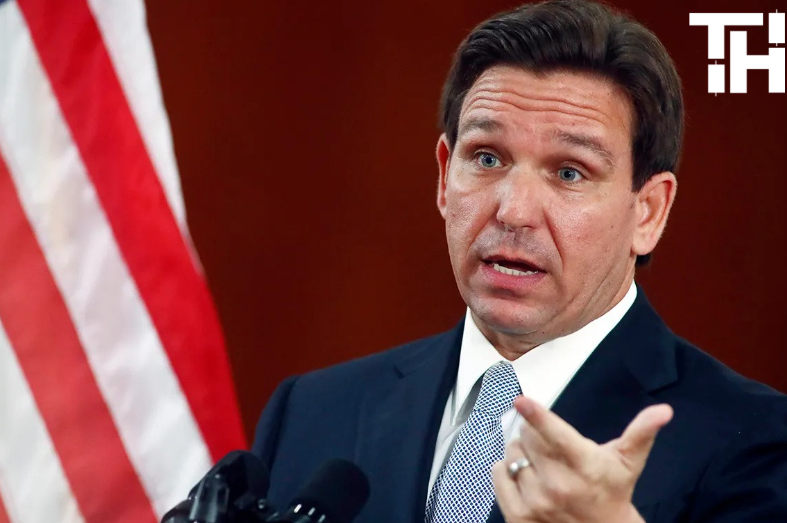
Florida lawmakers have passed a new bill that introduces a regulatory framework for payment stablecoins in the state, marking another step toward formal oversight of digital assets. The legislation, Senate Bill 314, has cleared both chambers of the Florida Legislature and is now awaiting the signature of Governor Ron DeSantis to become law.
The proposal received unanimous approval in the Florida Senate. According to Samuel Armes, the bill is expected to be signed within the next month, which would formally establish rules for stablecoin issuers operating in the state.
Bill Introduces Framework for Payment Stablecoins
SB 314 lays out guidelines for companies issuing payment stablecoins in Florida. The measure aims to ensure that firms offering these digital tokens follow existing financial regulations while maintaining safeguards for consumers.
The legislation works alongside House Bill 175 to create a coordinated regulatory structure. Together, the bills introduce standards around transparency, operational requirements, and financial oversight for stablecoin issuers. The framework has been designed to align with the federal GENIUS Act, which was signed into law in July.
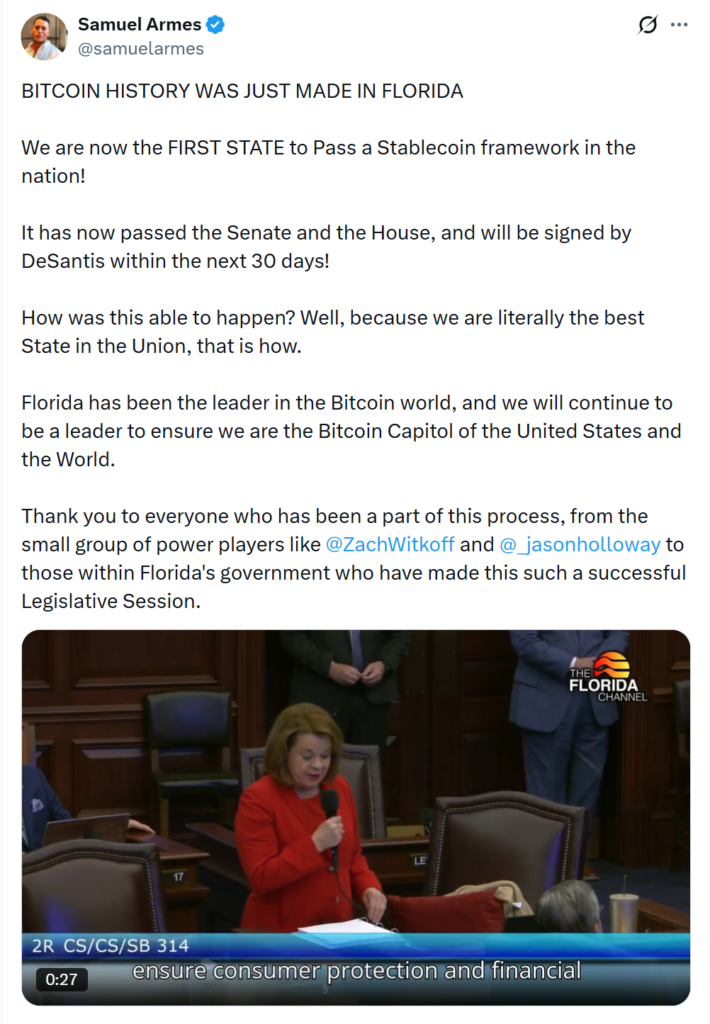
Supporters say the move will bring clarity to the rapidly growing stablecoin sector while allowing businesses to operate under defined rules.
Stablecoins Added to Money Laundering Oversight
One of the central changes in SB 314 is the expansion of Florida’s existing money services regulations to explicitly include stablecoins. The bill amends the state’s Control of Money Laundering in Money Services Business Act so that stablecoin issuers must comply with the same regulatory requirements as other financial service providers.
The law also makes it illegal for entities to issue payment stablecoins in Florida without proper authorization. At the same time, the bill clarifies that certain payment stablecoins will not be classified as securities, providing legal clarity for companies and investors.
Regulators say these measures are intended to strengthen financial oversight while reducing the risk of misuse in digital asset transactions.
Oversight for In-State and Out-of-State Issuers
The legislation outlines how stablecoin issuers will be supervised depending on where they are based and how their operations are structured.
Companies located outside Florida will be required to notify the state’s Office of Financial Regulation before offering stablecoins to residents. In some cases, issuers will be supervised solely by the state regulator, while others could face joint oversight from the Office of Financial Regulation and the Office of the Comptroller of the Currency.
The law also addresses incentive programs connected to stablecoins. Qualified issuers will not be allowed to offer interest or yield on their tokens if federal regulations prohibit such payments.
Florida Revisits Crypto Investment Plans
At the same time, Florida lawmakers are continuing discussions on broader cryptocurrency adoption. In October last year, a separate proposal was introduced that would allow the state to invest a portion of public funds in digital assets.
The proposal, known as House Bill 183, was filed by Republican Representative Webster Barnaby. If approved, the measure would allow the state and certain public entities to allocate up to 10 percent of their funds into digital assets.
Unlike earlier proposals focused mainly on Bitcoin, the updated bill includes a wider range of blockchain-based investments. These include crypto exchange traded products, crypto securities, non-fungible tokens, and other digital assets.
House Bill 183 is a revised version of an earlier proposal, HB 487, which was withdrawn in June after failing to advance in a House subcommittee.
If signed into law, SB 314 would position Florida among the growing number of U.S. states establishing clear rules for stablecoin issuers while continuing to explore broader integration of digital assets into public finance.
Leave a Reply