
India’s Central Board of Direct Taxes (CBDT) has launched a wide-scale investigation into suspected tax evasion involving cryptocurrencies. This major move comes as government data reveals significant non-compliance in tax filings related to digital assets. The probe is focused on uncovering hidden or unreported crypto earnings and ensuring that individuals and companies involved are held accountable under Indian tax law.
CBDT Targets Unaccounted Crypto Income
The CBDT is investigating a growing number of traders, investors, and entities suspected of using cryptocurrencies to hide or launder income. Officials say many individuals have failed to disclose their income from crypto trading or have misreported it in their income tax returns (ITRs).
Digital assets like cryptocurrencies fall under the category of Virtual Digital Assets (VDAs), which have been tightly regulated in India since the introduction of Section 115BBH under the Finance Act, 2022. This section enforces a flat 30% tax on income from crypto transactions, along with applicable surcharge and cess. Notably, it disallows deductions, including expenses (other than the cost of acquisition) and prevents setting off crypto losses against other income.
However, despite the clear rules, government analytics reveal that many taxpayers are either not reporting their crypto income at all, or are incorrectly claiming benefits, such as cost indexation, which is not allowed for VDAs.
Mismatch Between ITRs and TDS Data Raises Red Flags
The investigation was triggered by discrepancies between data reported by taxpayers in their ITRs and the Tax Deducted at Source (TDS) data submitted by Virtual Asset Service Providers (VASPs), which include crypto exchanges.
VASPs are required to deduct 1% TDS on crypto transactions above a certain threshold and submit this data to the tax department. When the CBDT compared this with taxpayers’ self-reported incomes, several mismatches emerged indicating either underreporting or non-reporting of income from digital assets.
This mismatch has now resulted in a nationwide crackdown, with CBDT identifying and reaching out to thousands of “high-risk defaulters.”
Thousands Alerted Under NUDGE Campaign
To ensure voluntary compliance, the CBDT has started sending alerts to individuals and firms suspected of evading taxes on crypto incomes. These alerts are part of the government’s NUDGE (Non-intrusive Usage of Data to Guide and Enable) program, which encourages taxpayers to come clean before facing stricter scrutiny.

The campaign operates under the department’s “Trust Taxpayers First” policy, where it prioritises voluntary correction over penalties. This is the third such NUDGE initiative in the past six months, following earlier efforts on foreign asset disclosure and wrongful claims under Section 80GGC.
Taxpayers who have received alerts are being encouraged to revisit and revise their ITRs, especially the section dedicated to VDAs, to avoid harsher actions. Those who continue to default may face penalties, further scrutiny, or even legal proceedings.
RBI Reaffirms Concerns as Supreme Court Pushes for Clarity
The CBDT investigation comes shortly after a renewed call from the Supreme Court for clear cryptocurrency regulations in India. In response, the Reserve Bank of India (RBI) reiterated its cautious stance.
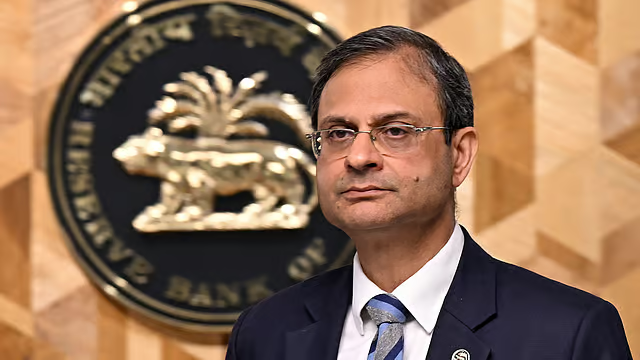
RBI Governor Sanjay Malhotra confirmed that a government committee is currently studying the issue of crypto regulations. He stated, “We remain concerned about the potential risks crypto poses to financial instability and monetary policy.”
The RBI has consistently warned against the use of private cryptocurrencies, highlighting their volatile nature and potential use in illicit activities like money laundering and terror financing.
India’s aggressive push to ensure tax compliance in the crypto space signals a new era of accountability. While digital assets remain largely unregulated in the country, the tax treatment is now crystal clear. Those involved in crypto trading and investments are advised to fully disclose their income, follow the rules under the Income Tax Act, and avoid attempting to bypass the system.
Leave a Reply