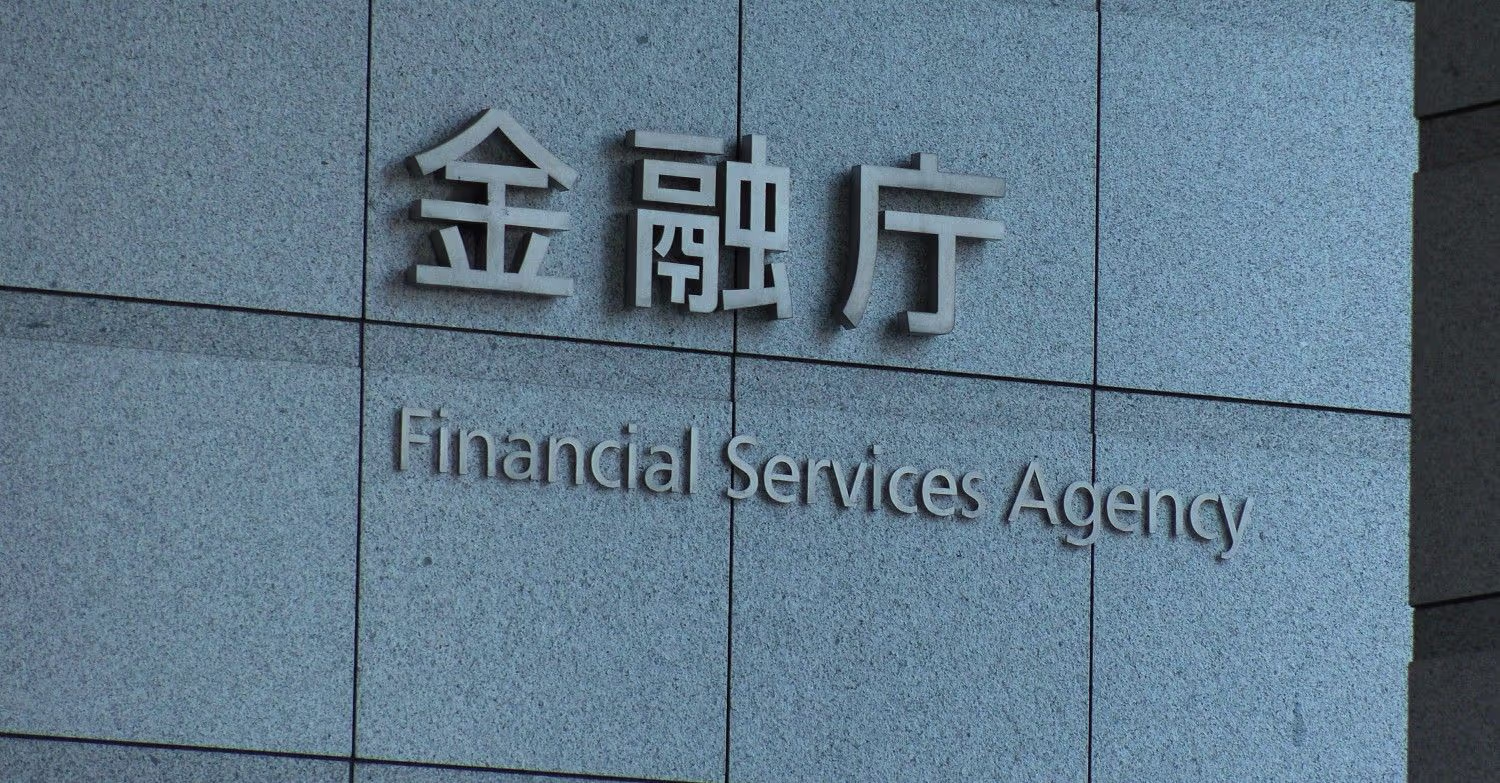
Japan’s Financial Services Agency (FSA) has unveiled a discussion paper outlining a new regulatory framework for cryptocurrencies. This approach classifies digital assets into two categories, aiming to enhance transparency and better address market complexities.
Dual Categorisation of Crypto Assets
The FSA’s proposed framework, detailed in the paper titled “Verification of the state of the system related to crypto assets,” divides cryptocurrencies into two categories:
- Type 1 Crypto Assets: These include tokens used for business purposes or raising funds for parent projects. Emerging altcoins often fall under this category, as they rely on community funding for growth.
- Type 2 Crypto Assets: This category encompasses more decentralised and established cryptocurrencies, such as Bitcoin and Ethereum, which do not issue tokens to raise funds.
The framework seeks to tailor regulations to the unique nature of each category, ensuring a more balanced and effective oversight of the crypto market.
Stringent Regulations for Type 1 Tokens
For Type 1 crypto assets, the FSA stresses the need for greater transparency. Issuers must disclose:
- The purpose of their funding.
- Project details.
- Risks associated with investing in the token.
These disclosure obligations aim to protect investors and build trust in the market. Regulations will become stricter as projects garner more investors. Additionally, certain Type 1 projects may face security token regulations, depending on their structure.
Exchange Platforms to Manage Type 2 Oversight
Unlike Type 1, the FSA will not directly regulate issuers of Type 2 crypto assets due to decentralisation challenges. Instead, oversight will focus on crypto exchange platforms, which must report significant price fluctuations that impact the market.
The FSA highlighted that regulatory efforts for Type 2 tokens will primarily involve monitoring through exchanges, ensuring a balanced approach without imposing unrealistic obligations on decentralised projects.
Future Steps and Public Feedback
The FSA is seeking public feedback on the framework until May 10, 2025, before finalising the regulations. The agency plans to incorporate global regulatory trends and public opinion into its policies.
Additionally, the FSA announced plans to revise the Financial Instruments and Exchange Act, expected to reclassify cryptocurrencies as a distinct financial product category by 2026.
This forward-looking framework highlights Japan’s intent to foster innovation while ensuring market stability and investor protection. As global regulatory landscapes evolve, Japan’s model could set a precedent for other nations aiming to regulate the dynamic crypto space.
Leave a Reply