
Artificial Intelligence is no longer a distant concept in the financial world. It is here, actively reshaping how investments are made and managed. In the fast-moving world of cryptocurrencies, AI is now playing a role that feels both revolutionary and unsettling. On one hand, it promises sharper strategies, automated risk management, and round-the-clock efficiency. On the other hand, it raises concerns about transparency, accountability, and human oversight. The question before us is simple yet layered: Are we on the verge of unlocking the smartest way to invest, or are we walking blindly into an ethical minefield?
The Rise of AI in Crypto Investing
Cryptocurrencies already carry a reputation for being unpredictable. Prices can swing dramatically within hours. For human traders, this means sleepless nights, endless chart watching, and quick decision-making. AI tools have entered this space as a solution. Machine learning algorithms can analyze huge amounts of market data within seconds. They pick up signals that a human eye might miss.
AI bots now handle tasks like predicting short-term price movements, automating trades, and even rebalancing portfolios across multiple coins. Platforms are beginning to offer AI-driven wallets that can allocate funds based on market conditions. For many investors, this feels like a safety net. Instead of relying purely on gut feeling or scattered advice, they can now trust a system that is fueled by data.
The attraction is clear. A trader using AI does not need to stay awake at 3 AM to check Bitcoin’s price. Nor do they need to stress about complex patterns. The machine does the heavy lifting.
Promise of Smarter and Fairer Investing
Supporters of AI in crypto often argue that this is the natural next step in finance. After all, Wall Street has been using AI-powered systems for years. High-frequency trading is built on complex algorithms. If traditional markets benefit from data-driven intelligence, why should crypto remain behind?
AI can also make investing more accessible. A beginner with little knowledge can rely on automated strategies to avoid costly mistakes. Imagine a farmer in a small town who has never invested before but decides to put a small sum into crypto. With an AI wallet, their risk exposure could be managed automatically. In theory, this could open doors for millions who have been left out of financial markets.
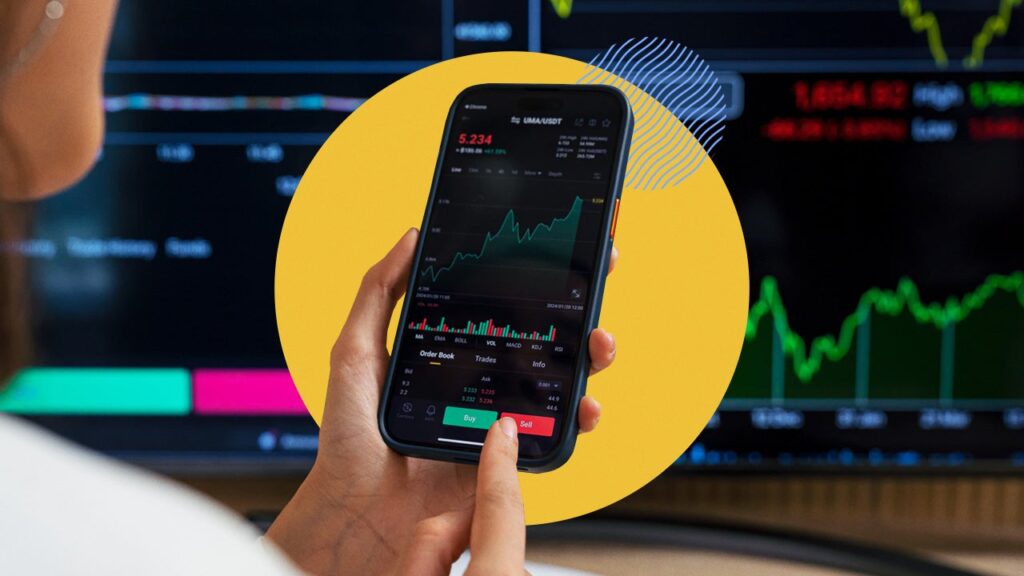
Another positive is consistency. Unlike humans, AI does not panic. It does not fall for rumors or get swayed by Twitter trends. Its decisions are based on coded logic and statistical probability. If widely adopted, this could even reduce the extreme volatility that plagues the crypto market.
The Transparency Dilemma
Yet, the picture is not all bright. One of the biggest concerns is transparency. Investors often do not know how the AI is making decisions. The algorithms are complex and sometimes designed as black boxes. If a trade goes wrong or an entire portfolio collapses, who is responsible? The developer of the AI? The platform hosting it? Or the investor who trusted it?
This lack of clarity becomes more troubling when we realize that crypto markets are already loosely regulated. Traditional finance has regulators who can investigate fraud or manipulation. Crypto, however, exists in a gray area. When you mix that with opaque AI models, the risks multiply.
Another worry is bias. AI systems learn from data. If the data itself carries biases or errors, the output will also be flawed. A trading bot could unknowingly favor certain coins or strategies not because they are smarter but because the historical data suggests so. This could create artificial bubbles or sudden crashes.
The Human Element at Risk
Investing has always carried a human element. It is about judgment, experience, and sometimes instinct. By shifting the responsibility entirely to machines, we may lose that balance. The worry is not just about losing jobs in the financial sector. It is also about losing accountability.
Consider this: if thousands of investors use the same AI-driven strategy, markets could move in a uniform way. A single miscalculation in the algorithm could spark a chain reaction. This has happened in traditional markets during flash crashes triggered by automated systems. Crypto, being even more volatile, could see worse outcomes.
There is also an ethical question: should money decisions be left entirely to machines? Finance impacts lives. A poor farmer investing savings into crypto deserves more than a black-box answer. They deserve clarity and human oversight.
Striking a Balance Between Innovation and Ethics
So where do we go from here? The answer is not to shut the door on AI in crypto. Its potential is too valuable to ignore. But we need balance. Investors must demand transparency from platforms. Developers must design AI systems that are explainable, not hidden behind complex jargon. Regulators, too, must step in to create guidelines.
Imagine an industry where every AI-driven trade comes with a clear reasoning log that the investor can access. Imagine a rulebook that forces platforms to disclose risks in plain language. These steps could make the system both innovative and ethical.
At the same time, education is key. Investors should not blindly trust AI tools. They must see them as assistants, not as final decision-makers. The human mind should remain in control, using AI only as a lens to see the market more clearly.
Conclusion: The Double-Edged Sword
AI in crypto investing is like a double-edged sword. On one side, it promises speed, accuracy, and fairness. On the other side, it raises deep ethical and transparency concerns. We stand at a crossroads. If we embrace it wisely, with the right checks and balances, AI could make investing safer and more inclusive. If we rush without caution, we risk creating a market where human responsibility disappears and machines hold the power.
The future of crypto will likely be written by both human intuition and machine intelligence. The challenge is ensuring that one does not silence the other. After all, finance is not just about numbers and code. It is about trust, fairness, and responsibility.