
Pakistan is making bold strides toward cryptocurrency regulation, aiming to position itself as a leader in blockchain finance. With a pro-business legal framework in the works, the country seeks to attract international investors and tap into its tech-savvy youth.
A Pro-Business Legal Framework
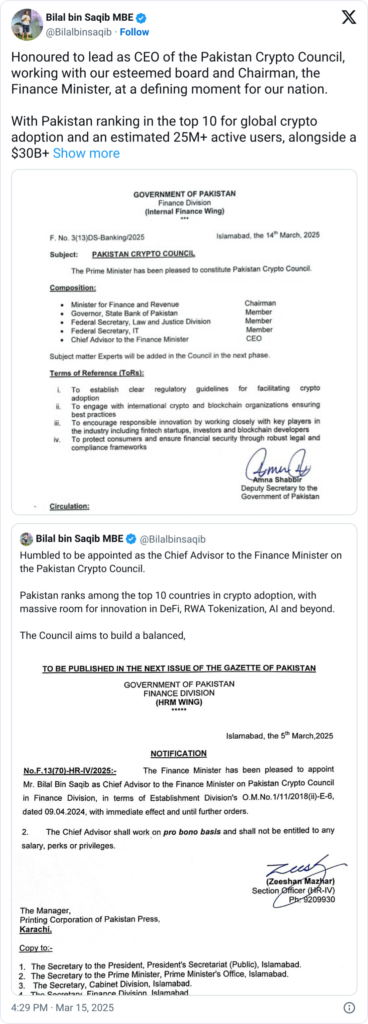
The Pakistan Crypto Council (PCC), under the leadership of newly appointed CEO Bilal Bin Saqib, has unveiled plans to develop a clear regulatory framework for cryptocurrency. Speaking to Bloomberg, Saqib emphasised the urgency of this initiative, stating, “Pakistan is done sitting on the sidelines. We need regulatory clarity to attract international investment.”
With 60% of Pakistan’s population under 30, Saqib highlighted the potential of the Web3-native workforce to drive innovation in blockchain-powered finance.
High Adoption and Growing Ambitions
Pakistan ranked ninth globally in crypto adoption last year, according to Chainalysis, with an estimated 20 million users already participating in the digital asset economy.
Saqib noted that cryptocurrency could help reduce the high transaction fees associated with remittances and trade, which currently range between 5-9%. By leveraging blockchain technology, Pakistan could build seamless cross-border payment systems, boosting economic efficiency.
Trump’s Crypto Influence
Saqib also drew attention to global crypto developments, citing Donald Trump’s pro-crypto stance as a catalyst for international action. The former U.S. president’s efforts to establish a Bitcoin reserve and crypto stockpile have made waves in the blockchain world.
“Trump is making crypto a national priority, and every country, including Pakistan, will have to follow suit or risk being left behind,” Saqib remarked, underscoring the urgency for Pakistan to keep pace.
A Blockchain Advantage for Developing Nations
Pakistan’s push for blockchain adoption mirrors similar initiatives in other developing nations, such as Nigeria. Saqib highlighted blockchain’s potential to reduce reliance on traditional banking systems, cut fees, and foster financial inclusion.
As he stated, “This is just the beginning. Pakistan is open for business.” With the right framework, Pakistan could transform its economic landscape and become a hub for blockchain innovation in Central Asia.
Leave a Reply