
Polygon has rolled out a major upgrade to its network “Heimdall v2” that slashes transaction finality time from 1–2 minutes to just 5 seconds. This significant enhancement positions Polygon as one of the fastest and most scalable blockchains in the market, making it ideal for real-time payments, tokenised assets, and enterprise-grade applications.
A Game-Changer for Transactions
The Heimdall v2 upgrade marks a turning point for Polygon’s Proof-of-Stake (PoS) chain. Before the update, users often had to wait over a minute for transaction finality. Now, that wait has been cut down to an almost instant 5 seconds. This speed enhancement is especially important for sectors like fintech, payments, and tokenised real-world assets (RWAs), where rapid confirmations are critical.
This upgrade makes digital transactions feel more like traditional finance (fast, efficient, and reliable) improving user experience and enabling new use cases in both decentralised and regulated financial ecosystems.
Behind the Upgrade: CometBFT Replaces Tendermint
The core of the Heimdall v2 upgrade is a shift in the consensus mechanism. Polygon has moved from Tendermint’s consensus to CometBFT, a modern and efficient protocol that offers greater speed and network stability.
This change not only increases performance but also removes outdated legacy code, enhancing the network’s security, reliability, and long-term scalability. It paves the way for Polygon to handle larger-scale applications and future growth without compromising performance.
Higher Throughput with the Bhilai Hardfork
Alongside the Heimdall v2 upgrade, Polygon also implemented the Bhilai hardfork. This hardfork brought two major improvements:
- Increased Throughput: Polygon can now process up to 1000 transactions per second (TPS), significantly increasing the number of transactions it can handle simultaneously.
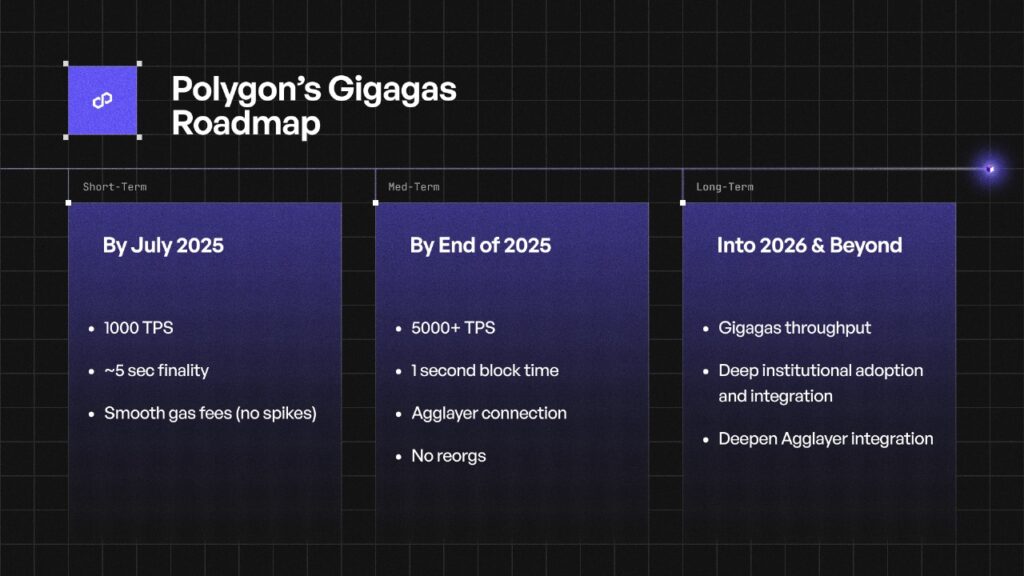
- EIP-7702 Support: The upgrade adds support for Ethereum’s latest account abstraction proposal, enabling more flexible wallet interactions and improved user experience.
Together, these changes make Polygon more developer-friendly and ready for advanced Web3 use cases and financial applications.
Growing Adoption and Real-World Impact
In just the first half of 2025, Polygon processed over $1 billion in transactions via platforms like Nexo, Bitso, Revolut, and Paxos. It currently supports stablecoins with a total value of $2.7 billion, a strong signal of its role in digital payments.
The 5-second transaction finality has caught the attention of both crypto-native builders and traditional financial institutions. Whether it’s instant stablecoin transfers or integrating blockchain into payment apps, the upgraded Polygon network delivers the speed and reliability required.

Looking forward, Polygon PoS will be integrated into the Agglayer ecosystem, a cross-chain liquidity network aimed at achieving instant finality and seamless interoperability across blockchains. With a projected capacity of over 5000 TPS and improved cross-chain support, Polygon is shaping up to be a foundational layer for the future of global finance.
Polygon’s Heimdall v2 upgrade is more than just a speed boost, it’s a strategic evolution. By improving finality, upgrading consensus, and preparing for multi-chain futures, Polygon is ready to support everything from everyday payments to enterprise-level Web3 platforms. For developers, businesses, and users alike, this marks a new era of fast, scalable, and reliable blockchain technology.
Leave a Reply