Chaos erupted in financial markets on Monday morning as thousands of Robinhood users took to social media to report widespread outages just as trading began. The disruption prevented many from executing trades or accessing their accounts during one of the most volatile and high-traffic periods of the trading day, market open.
Users flooded platforms such as X (formerly Twitter) and Reddit, expressing anger and disbelief at being locked out of their portfolios. For short-term and day traders, this early window is critical, often dictating profit and loss outcomes within minutes. The frustration was amplified by Robinhood’s silence; as of press time, the brokerage’s official status page and social channels had yet to acknowledge or explain the technical failure.
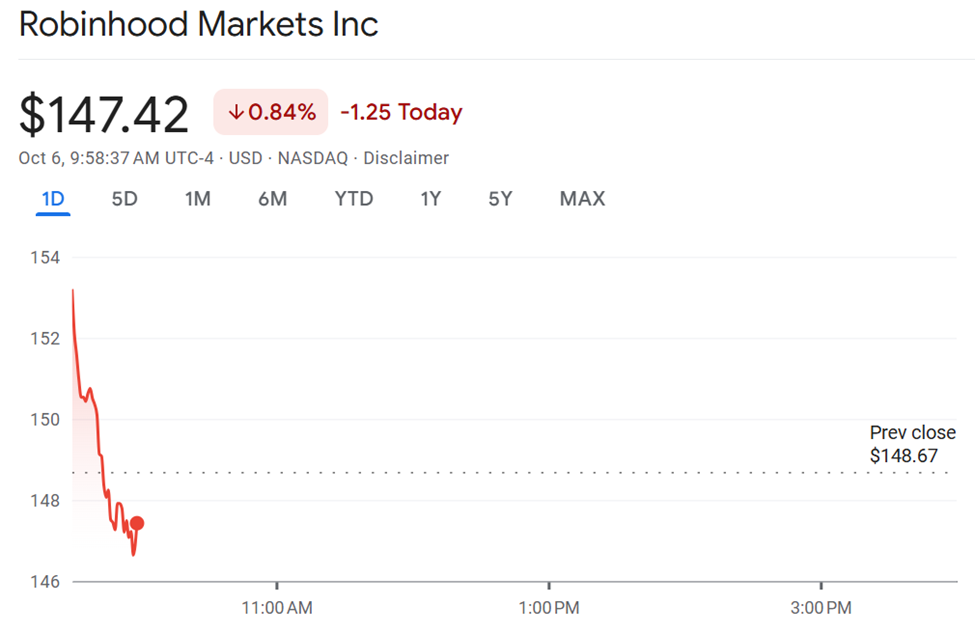
Robinhood Markets Inc. (NASDAQ: HOOD) shares dropped roughly 1.25% following the reports, closing at around $147.42 on Monday. While the dip was modest, the reputational hit could have deeper implications, particularly as competition in the retail trading space intensifies.
Déjà Vu for Retail Traders
This latest glitch marks the second major outage for a retail-focused platform in just two months. In early August, Coinbase’s Base blockchain suffered a similar disruption, raising fresh concerns about the reliability of trading infrastructure during periods of high demand.
Robinhood, known for democratising finance and popularising commission-free trading, has previously faced backlash for outages during crucial market moments, particularly during the pandemic-era trading frenzy of 2020 and 2021. Each incident chips away at user trust, especially among active traders who rely on split-second execution.
The current outage reignites the debate around platform resilience and scalability, especially as retail participation in both equities and crypto markets continues to surge. Despite major investments in infrastructure over recent years, it appears that some of the most popular trading apps remain vulnerable to load stress.
Galaxy Digital Steps Into the Spotlight
Ironically, the Robinhood blackout coincided with the launch of GalaxyOne, a new retail trading platform from Mike Novogratz’s Galaxy Digital, which is positioning itself as a direct competitor to Robinhood.
GalaxyOne offers commission-free access to over 2,000 US stocks and ETFs, as well as cryptocurrencies such as Bitcoin and Ethereum, effectively bridging the gap between traditional and digital assets. The app also includes yield-bearing products, with 4% APY on cash deposits and an 8% investment note available to accredited investors committing at least $25,000.
The timing of GalaxyOne’s debut could not have been more fortuitous. As Robinhood users vented their frustration, Galaxy Digital’s shares surged nearly 10% on Monday, buoyed by investor optimism that the firm could capture dissatisfied retail traders seeking a more stable alternative.
In a statement, Galaxy Digital said its long-term ambition is to “unify traditional and digital finance under a seamless retail experience” a space Robinhood has dominated for years but now faces competition from a player with deep crypto roots and growing Wall Street credibility.
A Changing Landscape for Retail Investors
Galaxy Digital’s bold move underscores the shifting dynamics of the retail investment market. As crypto-native firms expand into traditional assets and brokers like Robinhood deepen their crypto offerings, the lines between legacy finance and decentralised finance are blurring fast.
Regulatory sentiment has also turned slightly more favourable for digital asset firms in 2025, allowing companies like Galaxy to pursue aggressive growth strategies. Galaxy Digital’s stock has more than doubled this year, reflecting investor confidence in its diversified approach to finance.
For Robinhood, however, the timing of this outage could hardly be worse. It arrives at a moment when the firm is striving to broaden its global reach, strengthen user retention, and distance itself from past controversies. Frequent technical issues risk alienating precisely the audience it worked hardest to attract young, tech-savvy traders seeking convenience and control.
If GalaxyOne delivers on its promise of a smoother, more integrated experience, it may well siphon off a portion of that base. In an industry where user loyalty is fickle and reliability is paramount, outages like Monday’s can accelerate competitive shifts almost overnight.
A Critical Moment for Robinhood
Monday’s events serve as a stark reminder that in the fast-paced world of retail investing, trust and uptime are as valuable as market access itself. While Robinhood investigates the cause of its latest outage, Galaxy Digital appears to be capitalising on the opportunity, not through coincidence, but by offering what disillusioned users now demand: stability, transparency, and diversification.
As the digital finance ecosystem matures, the competition between these two giants could define the next chapter in retail investing, one where seamless trading and system reliability may ultimately decide who wins the loyalty of the next generation of investors.
Leave a Reply