
The cryptocurrency market witnessed several key developments today, with major moves from UK Finance, BlackRock and Hashdex that highlight the growing integration of digital assets into mainstream finance.
UK Finance Begins Tokenised Sterling Deposit Pilot
UK Finance, a trade association representing more than 300 financial services firms, has initiated a pilot for tokenised sterling deposits known as GBTD. The project, launched in partnership with six major UK banks including Barclays, HSBC, Lloyds Banking Group, NatWest, Nationwide and Santander, will run until mid-2026.
The aim is to provide a digital version of traditional pound commercial bank money. The pilot will test three use cases: online marketplace payments, remortgaging processes and wholesale bond settlement. According to Quant founder and chief executive Gilbert Verdian, the initiative is not just about faster payments but about enabling programmable money that could transform how value is transferred and managed.
BlackRock Pursues Yield with Bitcoin Premium Income ETF
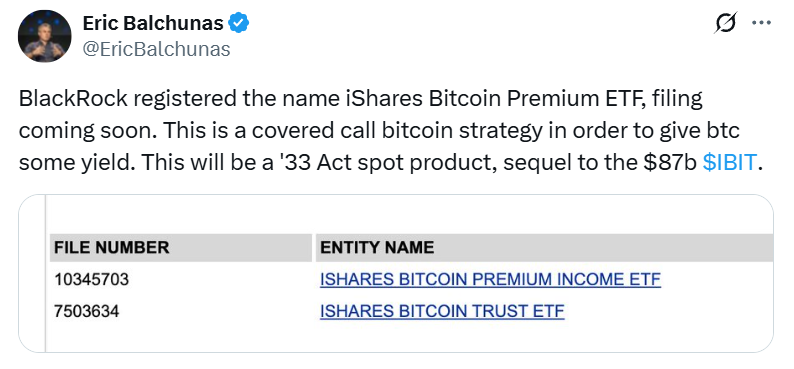
Asset management firm BlackRock has taken steps to establish a Delaware trust company for its proposed Bitcoin Premium Income ETF. The product will use a covered call strategy on Bitcoin futures, generating income from option premiums while sacrificing some of the asset’s upside potential.
Bloomberg analyst Eric Balchunas described the product as a “sequel” to BlackRock’s iShares Bitcoin ETF (IBIT). Since its launch in January 2024, IBIT has attracted over $60.7 billion in inflows, making it the largest spot Bitcoin ETF. Fidelity’s Wise Origin Bitcoin Fund follows at $12.3 billion.
The proposed Premium Income ETF is designed to appeal to investors seeking regular yield from Bitcoin exposure rather than pure price appreciation.
Hashdex Expands Crypto Index ETF to Add XRP, Solana and Stellar
Hashdex has broadened its Crypto Index US ETF by including XRP, Solana and Stellar, in addition to Bitcoin and Ether. The fund, listed on the Nasdaq under the ticker NCIQ, now holds five cryptocurrencies on a one-to-one basis.
This expansion follows the US Securities and Exchange Commission’s approval of generic listing standards in September, which allow ETFs to add eligible digital assets more quickly. To qualify, cryptocurrencies must either be classified as commodities or have futures contracts listed on regulated exchanges, as well as being subject to market surveillance.
Regulatory Shifts Pave Way for More ETFs
Industry analysts expect a wave of new ETF filings as the updated SEC framework provides a faster path for approval. The rules are expected to increase access to digital assets for traditional stock market participants and further blur the distinction between established financial products and emerging crypto investments.
With major institutions like BlackRock, Hashdex and UK Finance driving innovation, today’s developments reflect a financial landscape that is rapidly adapting to the rise of blockchain and digital assets.
Leave a Reply